Queer asylum seekers
Women and Islam
Is anyone ever silent?
Is silence always disempowerment?
Who gets to speak?
I am welling up with tears.
All the American artists of colour traveling to Australia riding on the wealth of a global hegemon built by slavery and genocide
and I get to gasp in awe.
The stone temples of Angkor in Cambodia
which inspire pilgrims and tourists thirty for the sacred
were commissioned by monarchs
that worked their slaves to skin and bones and death
to build their religious empire...
Now every liberal multiculturalist wants to say that they have been.
I have been, brought to my knees
I am welling up with tears.
The world is a strange place filled with strange travellers
who come from here and there and that
who master thoughts and concerns I could never even imagine
and I am one of them for You and You and You
and I am one of You for Them and Them and Them.
Tuesday, April 8, 2014
Monday, April 7, 2014
Studying Chinese Medicine
Studying Chinese medicine is kind of like studying poetry, more than like studying medicine...
And, like studying poetry, it can be extremely medicinal.
And, like studying poetry, it can be extremely medicinal.
Sunday, April 6, 2014
Middle Class Organisers in Low-Income Communities
"Often the paid organizers in low-income communities come from professional middle-class backgrounds. I worked as a community organizer for many years, and the class dynamics can be tricky. Nearly everything I know about poverty and urban politics, I learned from members of groups I staffed. I loved the relationships I built with people on their stoops and around their kitchen tables.
Seeing people move from less to more powerful was exhilarating. Here's one story. I was trying to persuade tenants at an apartment complex to come to a City Council hearing. Knocking on doors, I asked one woman, Donna, to come, she said no, I pleaded. Finally she said she would attend but she absolutely wouldn't say a word, because she was terrified of public speaking. She sat at the hearing listening to testimony, until a tenant leader mentioned the lack of sidewalks between their apartment complex and the shopping area. At that point Donna leapt up, saying, "Ooh! I have something to say about that road!" She took the mic and told a hair-raising story about how a car came within an inch of hitting her child while she was pushing a stroller and trying to get 3 kids down to the bus stop. The City Council voted on the spot to appropriate money for a sidewalk — something that wasn't even on their docket of proposals. Last time I visited that city, I walked that sidewalk, grinning the whole way.
And of the five tenant groups I organized, three now own and run their own apartment complexes as permanently affordable housing, so I feel I made a real difference.
But it's a tricky relationship with many pitfalls, the relationship of middle-class organizer to working-class community.
I've encountered groups that were basically fronts for one staff person, usually a leftist white man. The low-income members were basically his mouthpieces. All their speeches were written by him, using their legitimacy as low-income people to spread his ideas. In the power balance between the staff's expertise and the members' knowledge of the community, those groups were way off balance.
Grassroots members get crucial information funneled through the organizer, information they need to make decisions. The staff can convey their biases either consciously or unconsciously in how the information is presented. I remember presenting choices to tenant groups about models of tenant buy-outs — decisions that would make all the difference in the future of their homes — and trying not to let my own opinions show. If I had concrete information about why one option would be better for them, that seemed fair to share, but if it was just my own preference, I tried not to betray it. No doubt I didn't always succeed, as my doubts and enthusiasm crept into my tone of voice"
Seeing people move from less to more powerful was exhilarating. Here's one story. I was trying to persuade tenants at an apartment complex to come to a City Council hearing. Knocking on doors, I asked one woman, Donna, to come, she said no, I pleaded. Finally she said she would attend but she absolutely wouldn't say a word, because she was terrified of public speaking. She sat at the hearing listening to testimony, until a tenant leader mentioned the lack of sidewalks between their apartment complex and the shopping area. At that point Donna leapt up, saying, "Ooh! I have something to say about that road!" She took the mic and told a hair-raising story about how a car came within an inch of hitting her child while she was pushing a stroller and trying to get 3 kids down to the bus stop. The City Council voted on the spot to appropriate money for a sidewalk — something that wasn't even on their docket of proposals. Last time I visited that city, I walked that sidewalk, grinning the whole way.
And of the five tenant groups I organized, three now own and run their own apartment complexes as permanently affordable housing, so I feel I made a real difference.
But it's a tricky relationship with many pitfalls, the relationship of middle-class organizer to working-class community.
I've encountered groups that were basically fronts for one staff person, usually a leftist white man. The low-income members were basically his mouthpieces. All their speeches were written by him, using their legitimacy as low-income people to spread his ideas. In the power balance between the staff's expertise and the members' knowledge of the community, those groups were way off balance.
Grassroots members get crucial information funneled through the organizer, information they need to make decisions. The staff can convey their biases either consciously or unconsciously in how the information is presented. I remember presenting choices to tenant groups about models of tenant buy-outs — decisions that would make all the difference in the future of their homes — and trying not to let my own opinions show. If I had concrete information about why one option would be better for them, that seemed fair to share, but if it was just my own preference, I tried not to betray it. No doubt I didn't always succeed, as my doubts and enthusiasm crept into my tone of voice"
- Betsy Leondar-Wright,
Program Director, Class Action
Program Director, Class Action
5 of Pentacles
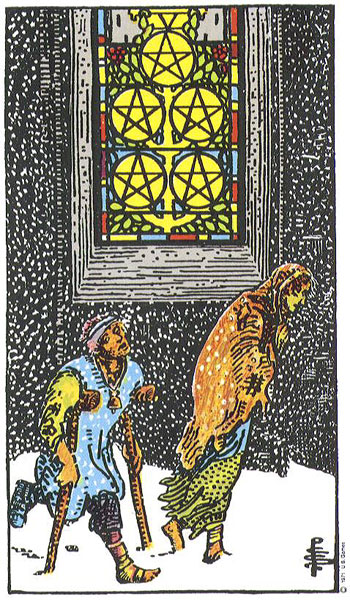
Po-cu
There is shelter, still, close by.
Just because you are cold, or worn down,
does not mean you are not still resilient.
Saturday, April 5, 2014
Just organised my desk
Turned out,
I don't need more things per se...
I need more tools to organise the things I already have...
Like goes with like.
So today, I got stationery holders, mini table drawers, lightweight stackable shelving, etc.
My life feels better already.
I don't need more things per se...
I need more tools to organise the things I already have...
Like goes with like.
So today, I got stationery holders, mini table drawers, lightweight stackable shelving, etc.
My life feels better already.
Friday, April 4, 2014
Could you embrace that?
Could you Embrace That
by Thomas Aquinas
"I said to God, ‘Let me love you.’
And he replied, ‘Which part?’
‘All of you, all of you.’ I said.
‘Dear’ God spoke, ‘You are as a mouse wanting to impregnate
a tiger who is not even in heat. It is a feat way
beyond your courage and strength.
You would run from me
if I removed my
mask.’
I said to God again,
‘Beloved I need to love you – every aspect, every pore.’
And this time God said,
‘There is a hideous blemish on my body,
though it is such an infinitesimal part of my Being-
could you kiss that if it were revealed?’
‘I will try, Lord, I will try.’
And then God said,
‘That blemish is all the hatred and
cruelty in this
world.’
"I said to God, ‘Let me love you.’
And he replied, ‘Which part?’
‘All of you, all of you.’ I said.
‘Dear’ God spoke, ‘You are as a mouse wanting to impregnate
a tiger who is not even in heat. It is a feat way
beyond your courage and strength.
You would run from me
if I removed my
mask.’
I said to God again,
‘Beloved I need to love you – every aspect, every pore.’
And this time God said,
‘There is a hideous blemish on my body,
though it is such an infinitesimal part of my Being-
could you kiss that if it were revealed?’
‘I will try, Lord, I will try.’
And then God said,
‘That blemish is all the hatred and
cruelty in this
world.’
a blessing
"May God bless us with discomfort at easy answers, half-truths, and superficial relationships, so that we may live deep within our hearts.
May God bless us with anger at injustice, oppression, and exploitation of people, so that we may work for justice, freedom, and peace.
May God bless us with tears to shed for those who suffer from pain, rejection, hunger, and war, so that we may reach out our hands to comfort them and turn their pain into joy.
And may God bless us with enough foolishness to believe that we can make a difference in this world, so that we can do what others claim cannot be done, to bring justice and kindness to all our children and the poor."
- a four-fold benedictine blessing - sr. ruth marlene fox, osb - 1985
May God bless us with anger at injustice, oppression, and exploitation of people, so that we may work for justice, freedom, and peace.
May God bless us with tears to shed for those who suffer from pain, rejection, hunger, and war, so that we may reach out our hands to comfort them and turn their pain into joy.
And may God bless us with enough foolishness to believe that we can make a difference in this world, so that we can do what others claim cannot be done, to bring justice and kindness to all our children and the poor."
- a four-fold benedictine blessing - sr. ruth marlene fox, osb - 1985
Every day, I do something to redeem myself.
Everyday is an expulsion of my sins, my evil, my illness, my disease
Everyday, I come out as a new shiny butterfly
still slimy from its cocoon
The world is full of amazing little creatures.
Insects, arachnids, worms,
Snails, slugs and leeches
I am alive to the small,
I am from the small, of the small.
Everyday, I come out as a new shiny butterfly
still slimy from its cocoon
The world is full of amazing little creatures.
Insects, arachnids, worms,
Snails, slugs and leeches
I am alive to the small,
I am from the small, of the small.
False.
I am a False Revolutionist,
A False Prophet.
Don't listen to me.
Every word I utter is a lie.
I cannot deny who I truly am, which is my utter Fallacious character.
I am an insult to injury,
I am salt in wounds,
I am the Arrogant God who Fell,
I am the Hell that awaits my mortal self.
I am ok.
I am ok.
I am a baby, a teardrop, a pearl.
A puddle, a poodle, a prince or a girl.
I am a football fan, I am her super hot, aggressively heterosexual, beer guzzling, bushy-bearded boyfriend.
I am his open heart and his tenderness,
I am asleep, once more.
You were with me when we were together,
I was with you when we were together
We were together when we were with one another.
This much is true.
A False Prophet.
Don't listen to me.
Every word I utter is a lie.
I cannot deny who I truly am, which is my utter Fallacious character.
I am an insult to injury,
I am salt in wounds,
I am the Arrogant God who Fell,
I am the Hell that awaits my mortal self.
I am ok.
I am ok.
I am a baby, a teardrop, a pearl.
A puddle, a poodle, a prince or a girl.
I am a football fan, I am her super hot, aggressively heterosexual, beer guzzling, bushy-bearded boyfriend.
I am his open heart and his tenderness,
I am asleep, once more.
You were with me when we were together,
I was with you when we were together
We were together when we were with one another.
This much is true.
defeated, I am still here
even after surrender,
I survive as a diminished version of a former self,
I can now be ready to receive You more fully
I survive as a diminished version of a former self,
I can now be ready to receive You more fully
Thursday, April 3, 2014
I really love my work in the world.
So be it. I do!
It's hard, sometimes, but it's a real privilege to be able to work where I want to live.
It's hard, sometimes, but it's a real privilege to be able to work where I want to live.
Wednesday, April 2, 2014
crystals break
freedom comes from ordinary moments suffused with awareness of their ephemerality
life is but a dream, i was told
i row, row, rowed a boat down gently down a sullen stream.
All possibilities are exhausted,
Thy will be done!
breath in, breath out... all hearts will be ablaze
at the sight of Him.
He. My Father, Lord and Savior.
My Mistress, Lady, Landlord
My Guard, my Protector, my Ejaculator
My Phallus, my Philistine introspections
my arms are spread out wide palms up
ready to Receive.
Buddha sat under a tree
while it dried and drizzled all around him, season to season
til he Awoke,
and then he walked and rested for the rest of his life.
***
"I want to make a Difference!"
"My simply being here already makes a Difference"
"I am the Difference I want to see in the World!"
"I hate being an Other."
***
Australia:
One day, it was brighter than the land could understand,
so it brought drought and this was what it was about.
life is but a dream, i was told
i row, row, rowed a boat down gently down a sullen stream.
All possibilities are exhausted,
Thy will be done!
breath in, breath out... all hearts will be ablaze
at the sight of Him.
He. My Father, Lord and Savior.
My Mistress, Lady, Landlord
My Guard, my Protector, my Ejaculator
My Phallus, my Philistine introspections
my arms are spread out wide palms up
ready to Receive.
Buddha sat under a tree
while it dried and drizzled all around him, season to season
til he Awoke,
and then he walked and rested for the rest of his life.
***
"I want to make a Difference!"
"My simply being here already makes a Difference"
"I am the Difference I want to see in the World!"
"I hate being an Other."
***
Australia:
One day, it was brighter than the land could understand,
so it brought drought and this was what it was about.
I am Australian
Second Wave me: "Hello. Hello."
sometimes I will make myself understood even
by the thinnest of strings
sometimes I will be the thinnest string
in a well-strung violin
In bowing, I will sound the highest note,
and no one would get anything done!
sometimes I will make myself understood even
by the thinnest of strings
sometimes I will be the thinnest string
in a well-strung violin
In bowing, I will sound the highest note,
and no one would get anything done!
because I could
...
...
...
...
Don't smoke the medicine, son.
It hits you too quickly, rather than
wafting in slowly from within you, in incremental ripples
beginning from my liver all the way to the tips of my hairs and the bottom of my toes.
This is strong stuff.
All this medicine.
Self-help books, manuals of this and that, bric-a-brac
Golliwogs displayed proudly in rural Australian fairs
Oriental still Eastern still Asian til
"Where are you from"
a familiar ringtone, leading to
"let me eat you out from your most private places"
then, frankly
"how often must this occur?"
a dream of something better, a live once lived, could have lived, mostly already lived,
also many state experiences of being fully lived, yet always:
the dream
of something better
the will to growth, development
sprouting from seedling under sun into
marigold or mushroom
sometimes, words will continue to haunt my every conscious moment, carving out,
as they do,
myriad differentiations out of indivisible eternity.
"Don't smoke this herb..."
Son
a religion founded on a special Sun
a religion founded on a special Son
a religion founded on a wand, magic, sex, rage
***
...
...
One day, I will be understood
as the Narcissist that I truly am
that sincerely, no one can ever fully understand me
not even me
and therefore, I am made eternally unknowable
except through all my arrogant traces
***
not exactly Narcissist,
also muse, someone else's Other
who becomes part of the self that I have become obsessed by
all others, indeed, filling in my sense of who "I" am, indubitably and even necessarily,
and I am left as no longer the small sense of my forgettable selfhood that is this lonely lifetime
but in the rewarding larger sum of all life together, weaved into
how I step my next steps.
a lofty goal?
a foolish dream?
an ever unfolding reality?
Nonsense. No one needs to know the new apartment.
I can speak truthfully and will be understood by even stony things.
...
...
...
Don't smoke the medicine, son.
It hits you too quickly, rather than
wafting in slowly from within you, in incremental ripples
beginning from my liver all the way to the tips of my hairs and the bottom of my toes.
This is strong stuff.
All this medicine.
Self-help books, manuals of this and that, bric-a-brac
Golliwogs displayed proudly in rural Australian fairs
Oriental still Eastern still Asian til
"Where are you from"
a familiar ringtone, leading to
"let me eat you out from your most private places"
then, frankly
"how often must this occur?"
a dream of something better, a live once lived, could have lived, mostly already lived,
also many state experiences of being fully lived, yet always:
the dream
of something better
the will to growth, development
sprouting from seedling under sun into
marigold or mushroom
sometimes, words will continue to haunt my every conscious moment, carving out,
as they do,
myriad differentiations out of indivisible eternity.
"Don't smoke this herb..."
Son
a religion founded on a special Sun
a religion founded on a special Son
a religion founded on a wand, magic, sex, rage
***
...
...
One day, I will be understood
as the Narcissist that I truly am
that sincerely, no one can ever fully understand me
not even me
and therefore, I am made eternally unknowable
except through all my arrogant traces
***
not exactly Narcissist,
also muse, someone else's Other
who becomes part of the self that I have become obsessed by
all others, indeed, filling in my sense of who "I" am, indubitably and even necessarily,
and I am left as no longer the small sense of my forgettable selfhood that is this lonely lifetime
but in the rewarding larger sum of all life together, weaved into
how I step my next steps.
a lofty goal?
a foolish dream?
an ever unfolding reality?
Nonsense. No one needs to know the new apartment.
I can speak truthfully and will be understood by even stony things.
Tuesday, April 1, 2014
Marijuana and Liver Yang
"Regardless of your constitution, because marijuana is primarily a Yin drug, ‘advance and act’ will eventually be replaced by ‘retreat and wait’ in both a short- and long-term context. In the short term, as the marijuana begins to take effect, it can make the user feel temporarily motivated and vigorous but after a period of time, even Yang types end up sitting around doing nothing. They are not in a Liver Yin excess state, as they are not experiencing emotional torment, but it is no longer an exciting or active state either. It is somewhere in between. It is waiting without anticipation. In the long term, this lethargy and passivity previews the kind of state that marijuana use can create on a more permanent basis. Most people, for example, are familiar with the stereotypical image of the ageing hippie or heavy dope smoker who can’t ever get their act together and do anything. This is not a personality type as many people think, it is often a behaviour arising from imbalances caused by excessive marijuana use. Unfortunately, the majority of long-term marijuana users will eventually fall into this category. It is such a slow and insidious process though, that they won’t see it happening. They will just change slowly over time until they eventually forget how active, engaging and energetic they once were.
People with a predominantly Yang constitution and a disciplined and focused lifestyle — which assists in the cultivation of Liver Yang — can regularly use marijuana and remain active and creative for years, maybe even decades. However, even for them, marijuana will slowly deplete Liver Yang and subsequently affect their ability to act upon their ideas. Everyone has a mental picture of who they are, of who they want to be and what they want to do in life. In TCM this is directly connected with the Liver. If you repeatedly take a substance that has a direct impact on the functioning of the Liver, as marijuana does, it can create an imbalance between your visions or ideas, and the impetus to act upon them. The idea becomes bigger and the action becomes smaller so you become more occupied with thinking and talking than doing. This is particularly frustrating for creative or talented people as they still have their creativity but have lost their ability to act. Once this happens, the magnifying nature of the drug, rather than increasing awareness of growth or expansion, increases awareness of being stagnant physically and emotionally. In this state, evidence of achievement in other people can make the drug-user acutely aware of their own deficiencies and they can become emotionally reactive."
People with a predominantly Yang constitution and a disciplined and focused lifestyle — which assists in the cultivation of Liver Yang — can regularly use marijuana and remain active and creative for years, maybe even decades. However, even for them, marijuana will slowly deplete Liver Yang and subsequently affect their ability to act upon their ideas. Everyone has a mental picture of who they are, of who they want to be and what they want to do in life. In TCM this is directly connected with the Liver. If you repeatedly take a substance that has a direct impact on the functioning of the Liver, as marijuana does, it can create an imbalance between your visions or ideas, and the impetus to act upon them. The idea becomes bigger and the action becomes smaller so you become more occupied with thinking and talking than doing. This is particularly frustrating for creative or talented people as they still have their creativity but have lost their ability to act. Once this happens, the magnifying nature of the drug, rather than increasing awareness of growth or expansion, increases awareness of being stagnant physically and emotionally. In this state, evidence of achievement in other people can make the drug-user acutely aware of their own deficiencies and they can become emotionally reactive."
- Jost Sauer, a German-Australian, based in Brisbane, from his book "Higher and Higher"
Monday, March 31, 2014
rehabilitating the Blog
Blogging can sometimes feel obsolete... "Retro".
Now, post-Tumblr & Facebook,
it's all bite-sized chunks of information.
I've gone from novels to essays to paragraphs to status updates, to twitter hashtags
teeny word summaries of other tiny sums,
to cross-posting, without further comment.
Sunday, March 30, 2014
Saturday, March 29, 2014
Friday, March 28, 2014
Last Night
A conversation between myself and 4 other Asian men at a bar in Newtown, NSW... Sparring wits about dancing, travel, sexuality, colonisation, Aboriginal Australian history, asylum seekers in Australia, and racism.
One of those evenings with the thought: This whole conversation should be hashtagged.
One of those evenings with the thought: This whole conversation should be hashtagged.
Thursday, March 27, 2014
Food and Work
A reflection... That every single thing I do at work and in my life would be enhanced and nurtured by improving my relationship to food. I do not simply nor even primarily mean this in the sense of nutrition, but rather in terms of centralising the role that food can play in community development, community engagement, community investment in any event, issue, evolution.
I love food, but I have been a real prince about food in my life. I primarily rely on others to grow the vegetables or the livestock, or to collect the eggs or seduce the bees to steal their honey. I rely on others to ship the food, to ferment it, distill it, chop it, wash it, package it, prepare it, cook it.
I primarily eat it.
I want to incorporate food more healthfully into my "events" for work, from support groups to a presence at festivals. I want to nurture my relationship to food producers to be more in connection with their social conscience, at the same time that I develop my own food consciousness as part of my own social conscience.
Reflections.
I love food, but I have been a real prince about food in my life. I primarily rely on others to grow the vegetables or the livestock, or to collect the eggs or seduce the bees to steal their honey. I rely on others to ship the food, to ferment it, distill it, chop it, wash it, package it, prepare it, cook it.
I primarily eat it.
I want to incorporate food more healthfully into my "events" for work, from support groups to a presence at festivals. I want to nurture my relationship to food producers to be more in connection with their social conscience, at the same time that I develop my own food consciousness as part of my own social conscience.
Reflections.
the sense...
The sense, this morning,
of a spectacle of ordinariness,
the magic of mundanity...
I am called to witness
my own participation,
complicity in the shaping
of the normal
through all its global manifestations.
Simply by breathing, loving,
complaining, cajoling, or otherwise standing still under a gentle shower
scrubbing yesterday away,
making room for tomorrow's insights
to glow eagerly from under my skin
of a spectacle of ordinariness,
the magic of mundanity...
I am called to witness
my own participation,
complicity in the shaping
of the normal
through all its global manifestations.
Simply by breathing, loving,
complaining, cajoling, or otherwise standing still under a gentle shower
scrubbing yesterday away,
making room for tomorrow's insights
to glow eagerly from under my skin
Wednesday, March 26, 2014
Tall Poppy Syndrome
"THE TALL POPPY SYNDROME:
ON THE RE-EMERGENCE IN CONTEMPORARY AUSTRALIA
OF AN ANCIENT GREEK AND LATIN MOTIVE
According to the Australian National Dictionary (AND; Ramson 1988: 494), echoed by the
Australian Concise Oxford Dictionary of current English (Moore 1997: 1393), a tall poppy is ‘a
person who is conspicuously successful; freq. one whose distinction, rank, or wealth attracts
envious notice or hostility’. The Dinkum Dictionary (Johansen 1988: 414) provides a similar,
two-part definition: it talks about a ‘very important person; influential person; person with status
– often held in contempt by others, who try to bring about this person’s downfall or ruin’. In
spite of recent attempts to revalue the term tall poppy (Peeters forthcoming), most Australians
remain convinced that tall poppies must be cut down or cut down to size. This is usually done by
uttering criticism or by adversely commenting on a reverse in status. It is said that Australians
derive a great deal of pleasure or satisfaction from engaging in this activity."
ON THE RE-EMERGENCE IN CONTEMPORARY AUSTRALIA
OF AN ANCIENT GREEK AND LATIN MOTIVE
According to the Australian National Dictionary (AND; Ramson 1988: 494), echoed by the
Australian Concise Oxford Dictionary of current English (Moore 1997: 1393), a tall poppy is ‘a
person who is conspicuously successful; freq. one whose distinction, rank, or wealth attracts
envious notice or hostility’. The Dinkum Dictionary (Johansen 1988: 414) provides a similar,
two-part definition: it talks about a ‘very important person; influential person; person with status
– often held in contempt by others, who try to bring about this person’s downfall or ruin’. In
spite of recent attempts to revalue the term tall poppy (Peeters forthcoming), most Australians
remain convinced that tall poppies must be cut down or cut down to size. This is usually done by
uttering criticism or by adversely commenting on a reverse in status. It is said that Australians
derive a great deal of pleasure or satisfaction from engaging in this activity."
Tuesday, March 25, 2014


Fanon's Freedom
"Some men want to fill the world with their presence. A German philosopher described this mechanism as the pathology of freedom."
- Frantz Fanon, from Black Skin, White Masks, pg 226
- Frantz Fanon, from Black Skin, White Masks, pg 226

Monday, March 24, 2014
Core work
Sciatica, ouch.
Then: Osteopathy at Inner North Osteo, a 5 minute walk from my workplace.
Now: Mmm... happy puppy.
I am pledging to myself, from now on, to begin every weight training session with core-muscle exercises. If I do not have the energy to do ab work, then I should not have the energy to do any other muscle exercises.
I must make the time and the space to strengthen my core, as the very basis upon which any other physical work can be done.
Then: Osteopathy at Inner North Osteo, a 5 minute walk from my workplace.
Now: Mmm... happy puppy.
I am pledging to myself, from now on, to begin every weight training session with core-muscle exercises. If I do not have the energy to do ab work, then I should not have the energy to do any other muscle exercises.
I must make the time and the space to strengthen my core, as the very basis upon which any other physical work can be done.
an amazing poem
I've quoted this from Frantz Fanon's "Black Skin, White Masks"...
This poem is originally by David Diop...

This poem is originally by David Diop...
Sunday, March 23, 2014
Amalgamation
Perhaps...:
Neither assimilation nor integration, but rather:
Amalgamation
A sum total greater than my parts, yet inseparable from them, and indissoluble even if they were repressed, denied, foregone or forgotten...
The parts also, themselves, in each perhaps also containing the whole.
I am an amalgam of composite parts, and I am the parts which both pre-empt and are perhaps greater than a composite whole.
Neither assimilation nor integration, but rather:
Amalgamation
A sum total greater than my parts, yet inseparable from them, and indissoluble even if they were repressed, denied, foregone or forgotten...
The parts also, themselves, in each perhaps also containing the whole.
I am an amalgam of composite parts, and I am the parts which both pre-empt and are perhaps greater than a composite whole.
Saturday, March 22, 2014
"Tall Poppies Club"
A hypothetical club...
Tall Poppies Club
A club for Tall Poppies. People who are tired of keeping our talents hidden. We wish to share them with one another, to learn from one another, to grow with one another, to develop through the vulnerability of visibility.
We are proud of our achievements and wish to share them with others. We acknowledge the virtue of modesty, at the same time that we wish to emphasise the reality of our excellence; not in order to sideline others, but in order to build a community of excellence, and a culture of innovation.
We are tall poppies who refuse to be cut down. Instead, we choose to remain tall, and encourage others to stand tall with us. We aspire to be taller, to become better at our work and our crafts, to share our successes with one another, alongside the lessons we have learned from our mistakes.
As part of Tall Poppies, I will:
- Be proud of my achievements
- Acknowledge the people who have supported me through my work in order to achieve what I have achieved
- Share my achievements with others
- Encourage others to share their achievements with me and with one another
- Commit to nurturing and sustaining a community that is proud of our achievements
- Aspire to continuing a cultural cycle of excellence
Tall Poppies Club
A club for Tall Poppies. People who are tired of keeping our talents hidden. We wish to share them with one another, to learn from one another, to grow with one another, to develop through the vulnerability of visibility.
We are proud of our achievements and wish to share them with others. We acknowledge the virtue of modesty, at the same time that we wish to emphasise the reality of our excellence; not in order to sideline others, but in order to build a community of excellence, and a culture of innovation.
We are tall poppies who refuse to be cut down. Instead, we choose to remain tall, and encourage others to stand tall with us. We aspire to be taller, to become better at our work and our crafts, to share our successes with one another, alongside the lessons we have learned from our mistakes.
As part of Tall Poppies, I will:
- Be proud of my achievements
- Acknowledge the people who have supported me through my work in order to achieve what I have achieved
- Share my achievements with others
- Encourage others to share their achievements with me and with one another
- Commit to nurturing and sustaining a community that is proud of our achievements
- Aspire to continuing a cultural cycle of excellence
(at least) One blogpost per day
I have decided to set myself a challenge...
To blog one page a day, for the rest of this month...
Even if it is a single sentence, a single phrase, a single word.
It could be a quotation from someone, or a vague sense of an idea.
It could be an image I'm cross-posting off the internet.
Mostly, it is to revisit this blog as an alternative to Facebook, which I've been disconnected from since the beginning of the month, in an attempt to reclaim an intellectual, social, and emotional space that doesn't hinge on the fickle whims of an aggressive newsfeed.
This blogpost per day is an exploration of discipline.
A recognition that "being a writer" is not (only) about moments of extreme genius, when the Muse has visited and blessed me with his presence, motivating me to gush words like libidinal spurts of wishful thinking, inviting praise and celebration.
No.
Rather, I want to connect with writing as a discipline, as a meditation, as itself an invitation to conversation, to dialogue... That all my writing will not only be in discrete, self-contained essays which are complete unto themselves, fully fleshed out and self-knowing. I want to write not only to indicate my knowing, but also as an expression of my unknowing, my undoing, my unknotting, my unfurling.
Perhaps nobody will read this.
Perhaps nobody will care.
And so what? I have not prefigured this blog to be for mass consumption, or accessibility, even as I do not either wish to overly glamourise obscurity at the expense of relationship.
I write because I care, or perhaps because I only want to care, and that may have to be enough.
This will be this for now.
To blog one page a day, for the rest of this month...
Even if it is a single sentence, a single phrase, a single word.
It could be a quotation from someone, or a vague sense of an idea.
It could be an image I'm cross-posting off the internet.
Mostly, it is to revisit this blog as an alternative to Facebook, which I've been disconnected from since the beginning of the month, in an attempt to reclaim an intellectual, social, and emotional space that doesn't hinge on the fickle whims of an aggressive newsfeed.
This blogpost per day is an exploration of discipline.
A recognition that "being a writer" is not (only) about moments of extreme genius, when the Muse has visited and blessed me with his presence, motivating me to gush words like libidinal spurts of wishful thinking, inviting praise and celebration.
No.
Rather, I want to connect with writing as a discipline, as a meditation, as itself an invitation to conversation, to dialogue... That all my writing will not only be in discrete, self-contained essays which are complete unto themselves, fully fleshed out and self-knowing. I want to write not only to indicate my knowing, but also as an expression of my unknowing, my undoing, my unknotting, my unfurling.
Perhaps nobody will read this.
Perhaps nobody will care.
And so what? I have not prefigured this blog to be for mass consumption, or accessibility, even as I do not either wish to overly glamourise obscurity at the expense of relationship.
I write because I care, or perhaps because I only want to care, and that may have to be enough.
This will be this for now.
Saturday, March 15, 2014
Art Videos
I have been watching quite a lot of art videos on Youtube recently, and I've decided to share a few that I've found to be especially exquisite...
Friday, March 14, 2014
"Satisfaction"
Satisfaction.
The Latin "Satis", to mean "sufficient" or "adequate"...
Sufficient Action.
Adequate Action.
This is, by definition, Satisfaction.
A day's work well done.
A life's work well lived.
Stepping Stones

The exquisite beauty of stepping stones.
They are, in themselves, a path for others and the final product of themselves. Stepping stones, in their fullness, are but stepping stones on the way to somewhere, and that is why they are perfect...
Friday, March 7, 2014
Notes on Fail Fast, Fail Often #3
The Lean Approach to Careers
- Make the smallest viable action plan - just enough to take the next positive action.
Don't worry about making a plan for the next three months, one year, or five years; instead focus on what you can do in the next week to have new experiences and learn. - Be good at taking small steps that allow you to try and learn about many things.
Learn to enjoy initiating small actions that lead to immediate feedback. - Perform experiments to confirm or disprove your assumptions about occupations that you are curious about.Don't believe what you hear about a career or what you have learned from books and television. Come up with your own experiments that allow you to find out how you feel about an occupation, how hard it is to do, how good you are at it, and so on. For example, try volunteering, enriolling in an introductory course, taking an internship, or getting a part-time job.
- Be prepared to change course; expect to make many small adjustments, as well as some big ones.Don't get stuck pursuing one career, even if you have committed time and resources preparing for it. It is normal and to be expected to adjust course according to what you learn and how your interests change.
- Avoid big investments in education, training and preparation until you have learned as much as possible.Don't make a long-term commitment until you have taken steps to try things, test your ideas, and learn more. For example, if you are interested in being a doctor, volunteer at a hospital, take a chemistry course, and see how you do on practice MCAT tests before you commit to a pre-med plan.
- Keep your plans informal.
When your friends and family ask you what career you want to pursue, resist giving a specific answer. Instead, tell them that you are testing out a number of different ideas (and ask for their input). That way you can collect facts and change direction without feeling embarrassment or being called a quitter.
Notes on Fail Fast, Fail Often #2
"It's a miracle that curiousity survives formal education."
- Albert Einstein
Curiousity-Killing Questions
- Albert Einstein
Curiousity-Killing Questions
- "Will I be good at it?"
By trying things that you may be bad at, you stop worrying about the approval of others and focus instead on your own fulfillment and growth. - "Do I have enough time?"
If you love something, it will encourage you to avoid unimportant activities that take up your time. - "Do I have the patience, talent, intelligence?
By trying it, you may find patience and talent that you didn't know you have, or you may find an important opportunity to improve. - "Am I sure I want to commit to it, and if so, will it take away from other areas of my life?"
You don't have to commit to anything unless you really want to. - "Will it cost too much?"
When you discover something that you are passionate about, it may inspire you to make money in new ways, or stop spending money on things you don't need. - "Will people think I am silly if I get involved?"
Successful people often enrich their lives with interests and hobbies that appear eccentric to others. Being silly is fun. - "Will it have a practical payoff? Will I meet a new boyfriend/girlfriend, develop social connections that benefit my career, learn skills that help me to earn more money or become more healthy and attractive?"
It is impossible to tell where beneficial life-changing events will arise. Since you can't know in advance, you might as well spend your time having fun and trying things you enjoy.
Five Keys to Curiousity
- Curiousity keeps you aware and present
- Curiousity has an expiration date
(i.e. it can context dependent... Good to follow curiousity at the time that it arises) - Curiousity provides energy
- Curiousity helps you learn quickly
(e.g. "Let's try this now" instead of "Let's come up with a comprehensive five-year-plan before we proceed) - Curiousity gets things moving
"We must be willing to get rid of the life we've planned, so as to have the life that is waiting for us."
- Joseph Campbell
- Joseph Campbell
Notes on Fail Fast, Fail Often #1
Just bought this book
Fail Fast, Fail Often: How Losing Can Help You Win
by Ryan Babineaux & John Krumboltz
Fail Fast, Fail Often: How Losing Can Help You Win
by Ryan Babineaux & John Krumboltz
Here are some notes...
Reframing Failure
Failure is:
- Seeing that you are off course
- Realising you need to learn more
- Product testing
- Finding out how you need help
- Exploring
- Discovering that you've ben misinformed
- Experimenting
- Seeing how you need to work harder
- Learning that it is not your best idea
- Market research
- Prototyping
Daily Guiding Questions
- What did you do today that was a lot of fun?
- What is something interesting that you learned?
- What happened that made you appreciate your life, work, family or friends?
- What did you encounter that made you curious?
- What did you experience that filled you with awe?
- What did you see that was beautiful or inspiring?
- What new things did you try or new places did you visit?
- What fulfilling social interactions did you have?
"Failing Forward"
- Identify your fearFind something that you would like to try but have hesitated to do because of your fear of failure.
(e.g. I want to try working as a professional photographer, but I am afraid that I might not be good enough at it to be successful) - Reverse your thinking
Come up with a way that you can fail at it as quickly as possible
(e.g. I am going to find a setting where I can take lots of bad pictures and let people see them. I can try at my cousin's wedding, which is happening next month.) - Do it anywayGet out there and give it a try. Ask others for help and feedback
(e.g. While taking pictures at the wedding, I will let people know I am a beginner and ask for comments and suggestions.) - Fail forwardUse your exploratory actions as a means to learn and discover what you need to know.
(e.g. What parts of taking the wedding photographs were the most or least enjoyable? What pictures did people like or dislike? What came naturally, and what do I need to work on?) - Find the next challenge
Seek out the next opportunity to do things at the limits of your abilities
(e.g. Next time I will ask to take pictures at a wedding where I get paid for my work.)
Some limiting "Not Yet" thoughts
"I will be ready to get going when":
- The economy picks up
- I feel inspired
- Someone tells me the right thing to do
- I have more money in savings
- The kids leave for college
- Things settle down
- I am in a more supportive relationship
- I discover my inner child
- I quit my dead-end job
- I feel more confident
- I forgive and am forgiven
- I finish my project
- My house is cleaned up
- I come up with a plan
- I overcome my limiting beliefs
- I do my taxes
- I am absolutely certain
- I attend a few more workshops
- I get permission
- I am better prepared
- I don't feel so tired
Focus on Opportunities, Not Problems
"Find a place inside where there's joy, and the joy will burn out the pain."
- Joseph Campbell
In Defence of Imperfection
Elsewhere, I have written a little on Voltaire's "The Perfect is the Enemy of the Good".
Here, I want to explore further.
Recently... I have been taking actions in deliberate foregoing of an overcommitment to certain high benchmarks of achievement. Not because I do not believe that they are attainable, but only that the pursuit of their attainment can sometimes mire me in inaction.
Here is a concrete example:
I have recently developed a resource on hepatitis B for Chinese and Vietnamese communities, without going through the benchmark (one might suggest even "basic") standards for steps in health promotion resource creation. For example, I did not engage in a formalised process of community consultation, I did not go through months of a needs assessment, and I primarily sought intra-organisational feedback instead of through a working group taskforce.
On the one hand, this is a "fail" from a perspective which privileges Perfection.
On the other hand, here are some other considerations, which complicate the ease with which I might otherwise label this exercise in resource creation a failure:
1. We are resource tight
2. I am the only Asian project worker in the office (hence, at least in part, already "community-identified")
3. I am time-poor, because the year-long grant was only really given to me about 5 months in, and it is a project which promises many deliverables on comparatively little financial support.
4. I work in a sector which generally has high turnover of staff
More on context:
The tyranny of perfection has meant that there have been few resources on hepatitis B that have targeted Chinese and Vietnamese communities (indeed, we get zero ongoing funding to do ANY work on hepatitis B at all, even as we have committed to doing so as an organisation and must thus rely primarily on staff initiative and one-off, small grants), and the high turnover of staff in general in the sector means that few people stay long enough to build and maintain relationships with target communities, let alone create any appropriate resources on these issues.
I write all of this now in Defence of Imperfection.
I will not describe all of the ways that imperfect work is imperfect or bad or dangerous... This is all already implicit by definition.
I instead am interested in a Buddhist/Japanese working aesthetic of Wabi-sabi... Imperfection and incompletion which actually allows room and space for contemplation, rumination, or even enlightenment.
Obviously this is a lofty claim in the context of producing resources on viral hepatitis!
Or is it?
Elsewhere, I have written about the "Do Something Principle", suggesting that it is not only that we begin with inspiration, followed by motivation, followed by action, but also that action can itself be a beginning which then brings about inspiration (from self and others), motivation (for example, to correct the imperfect action), and then further action.
I am experimenting with a new principle of autopoiesis, or memetic, self-replication of particular types of outcomes:
Instead of miring myself in worrying about being seen as a failure,
I am instead going to fail early, fail fast and fail often...
As this linked article explains,
I want to seek opportunities where I can face the limits of my skills and knowledge, limits that are partially determined by the circumstances I am in (as much as they are about my skills and knowledge per se), and then seek to improve upon my mistakes.
At the same time, I notice how I am sore to feedback that does not consider these circumstances... Still, is that really others' responsibility? Perhaps Yes, if these others are within my sector of employment. I far more value the feedback of community members whom I am targeting with my health promotion messages, rather than professional "experts" within a health promotion field that can paradoxically sometimes be overly self-serving, aiming for a "best practice discourse" over and above action inquiry.
All this said, I am also responsible for my own defensiveness... The field is a tough one, and stakes are high... I am dabbling in an area of life and death, without glamour and often gruelling and thankless.
In this area, I am an imperfect person working in an imperfect system, and thus engaging in imperfect action and imperfect production. What I hope to achieve is reproduction of a particular type of imperfection: One that is founded on the willingness to learn, and having the courage to act when others or I previously have been too mired by the will-to-Perfection to achieve anything much at all.
Here, I want to explore further.
Recently... I have been taking actions in deliberate foregoing of an overcommitment to certain high benchmarks of achievement. Not because I do not believe that they are attainable, but only that the pursuit of their attainment can sometimes mire me in inaction.
Here is a concrete example:
I have recently developed a resource on hepatitis B for Chinese and Vietnamese communities, without going through the benchmark (one might suggest even "basic") standards for steps in health promotion resource creation. For example, I did not engage in a formalised process of community consultation, I did not go through months of a needs assessment, and I primarily sought intra-organisational feedback instead of through a working group taskforce.
On the one hand, this is a "fail" from a perspective which privileges Perfection.
On the other hand, here are some other considerations, which complicate the ease with which I might otherwise label this exercise in resource creation a failure:
1. We are resource tight
2. I am the only Asian project worker in the office (hence, at least in part, already "community-identified")
3. I am time-poor, because the year-long grant was only really given to me about 5 months in, and it is a project which promises many deliverables on comparatively little financial support.
4. I work in a sector which generally has high turnover of staff
More on context:
The tyranny of perfection has meant that there have been few resources on hepatitis B that have targeted Chinese and Vietnamese communities (indeed, we get zero ongoing funding to do ANY work on hepatitis B at all, even as we have committed to doing so as an organisation and must thus rely primarily on staff initiative and one-off, small grants), and the high turnover of staff in general in the sector means that few people stay long enough to build and maintain relationships with target communities, let alone create any appropriate resources on these issues.
I write all of this now in Defence of Imperfection.
I will not describe all of the ways that imperfect work is imperfect or bad or dangerous... This is all already implicit by definition.
I instead am interested in a Buddhist/Japanese working aesthetic of Wabi-sabi... Imperfection and incompletion which actually allows room and space for contemplation, rumination, or even enlightenment.
Obviously this is a lofty claim in the context of producing resources on viral hepatitis!
Or is it?
Elsewhere, I have written about the "Do Something Principle", suggesting that it is not only that we begin with inspiration, followed by motivation, followed by action, but also that action can itself be a beginning which then brings about inspiration (from self and others), motivation (for example, to correct the imperfect action), and then further action.
I am experimenting with a new principle of autopoiesis, or memetic, self-replication of particular types of outcomes:
Instead of miring myself in worrying about being seen as a failure,
I am instead going to fail early, fail fast and fail often...
As this linked article explains,
"...a story about a ceramics teacher who tried an experiment with his class[:]
The teacher divided the students into two groups. Those sitting on the left side of the studio were to be graded solely on the quantity of their work, while those on the right, solely on the quality. The instructor informed the students in the quantity group that a simple rule would be applied to evaluate their grades: those who produced fifty pounds of pots would get an A, those who produced forty pounds a B, and so on.
For the quality group, the instructor told the students that he would assign a course grade based on the single best piece produced over the duration of the course. So if a student created a first-rate pot on day one of the course and did nothing else for the term, he would still get an A.
When the end of the quarter arrived and it came to grading time, the instructor made an interesting discovery: the students who created the best work, as judged by technical and artistic sophistication, were the quantity group. While they were busy producing pot after pot, they were experimenting, becoming more adept at working with the clay, and learning from the mistakes on each progressive piece.
In contrast, the students in the quality group carefully planned out each pot and tried to produce refined, flawless work, and so they only worked on a few pieces over the length of the course. Because of their limited practice, they showed little improvement.
We like this story because it points out an important principle: successful people take action as quickly as possible, even though they may perform badly.
Instead of trying to avoid making mistakes and failing, they actively seek opportunities where they can face the limits of their skills and knowledge so that they can learn quickly. They understand that feeling afraid or underprepared is a sign of being in the space for optimal growth and is all the more reason to press ahead. In contrast, when unsuccessful people feel unprepared or afraid, they interpret it as a sign that it is time to stop, readdress their plans, question their motives, or spend more time preparing and planning."
I want to seek opportunities where I can face the limits of my skills and knowledge, limits that are partially determined by the circumstances I am in (as much as they are about my skills and knowledge per se), and then seek to improve upon my mistakes.
At the same time, I notice how I am sore to feedback that does not consider these circumstances... Still, is that really others' responsibility? Perhaps Yes, if these others are within my sector of employment. I far more value the feedback of community members whom I am targeting with my health promotion messages, rather than professional "experts" within a health promotion field that can paradoxically sometimes be overly self-serving, aiming for a "best practice discourse" over and above action inquiry.
All this said, I am also responsible for my own defensiveness... The field is a tough one, and stakes are high... I am dabbling in an area of life and death, without glamour and often gruelling and thankless.
In this area, I am an imperfect person working in an imperfect system, and thus engaging in imperfect action and imperfect production. What I hope to achieve is reproduction of a particular type of imperfection: One that is founded on the willingness to learn, and having the courage to act when others or I previously have been too mired by the will-to-Perfection to achieve anything much at all.
Saturday, January 25, 2014
thoughts on absence
heart grows fonder
regrets surface
possibilities make themselves known
shimmering symbols, uphill paths
lead to golden goals
attachment to innocence, victimhood, martyrdom
solitude, longing
melancholy spells
cast contempt on what is given
uncertainty is eternal
certainty the lie
some lies must be told
to maintain the dignity of mystery
who is gone? who is left behind?
regrets surface
possibilities make themselves known
shimmering symbols, uphill paths
lead to golden goals
attachment to innocence, victimhood, martyrdom
solitude, longing
melancholy spells
cast contempt on what is given
uncertainty is eternal
certainty the lie
some lies must be told
to maintain the dignity of mystery
who is gone? who is left behind?
Wednesday, January 22, 2014
On disability and white privilege
Some thoughts on identity politics from a disability perspective...:
Not all impairments become disabilities. Indeed, even some "impairments" are simply attributes of a person, rather than impairments per se (i.e. they do not necessarily function as a LACK, only a site of difference from others).
As an example.
Being slightly short-sighted is an impairment. However, it does not double function as a disability in the society I live in, because glasses are relatively affordable and accessible for a majority of working people, socially acceptable, and thus my short-sightedness does not function in a way that disables me from functioning in society in the way it is currently built.
On the other hand...:
If I lost my legs, this too would be an impairment, but it would additionally classify as a disability. This is because this particular impairment would be significantly more disabling in this society, as a lot of society is not built for people who do not have legs. Even with access to a wheelchair, there are some buildings that I would not be able to get into, some corridors too narrow for me to navigate, some housing that I will not be able to rent, and some services I would thus have an excessive burden to be able to access.
Because of these additional disabling factors, having a disability of this kind may also potentially be further socially debilitating, with negative consequences on my mental health. To be denied entry or to not have basic access to services or certain forms of recreation, or to have people socially ostracise me because of my disability can do nasty things to my sense of self.
...
In considering all these, then, an additional foray into a consideration of Privilege-as-Impairment (but NOT as disability).
One of the things about benefiting from systemic oppression is having the privilege not to have to think about it if I don't want to (as compared to, for a person directly impacted by this oppression, who often does not have the choice to ignore it).
By way of example, white privilege can sometimes mean "colourblindness", a pretense of being able to "not see race" (because one does not necessarily live the negative material consequences of being racialised).
"Blindness", in an ordinary example, is an impairment which can function as a disability, because a lot of ordinary world is not built for people who cannot see.
"Colourblindness", in this race context, and "blindness to one's privilege" in general is an impairment that does NOT function as a disability, because a lot of ordinary world IS built to main this impairment as a normative way of being, and of understanding the world for white people and other privileged people.
The fascinating thing then:
When white privilege is pointed out to white folks, there can sometimes be a defensive posturing, as if I have pointed out some "flaw" in their character, akin to suddenly being equated to having a disability.
The overlap here, then, between racial justice and justice for people with disabilities...
That I must do a few things...:
1. To note that being made aware of one's (e.g. race) privilege is to call attention to the ways that privilege impairs us from being able to SEE CERTAIN TYPES OF REALITIES, and thus cuts us off fully from a significant portion of humanity's capacity for diverse perspectives.
2. To note that this impairment is not necessarily disabling, because often it is fully catered to.
3. This, in itself, a form of angst (to keep one developmentally thwarted through maintenance of privilege... the angst that comes from being "too sheltered").
4. Even if the privilege to be willfully ignorant were disabling (which it is not), having a disability need not and should not warrant social ostracism...
5. We should address all forms of social ostracism, at the same that we maintain integrity in relationships of accountability.
Not all impairments become disabilities. Indeed, even some "impairments" are simply attributes of a person, rather than impairments per se (i.e. they do not necessarily function as a LACK, only a site of difference from others).
As an example.
Being slightly short-sighted is an impairment. However, it does not double function as a disability in the society I live in, because glasses are relatively affordable and accessible for a majority of working people, socially acceptable, and thus my short-sightedness does not function in a way that disables me from functioning in society in the way it is currently built.
On the other hand...:
If I lost my legs, this too would be an impairment, but it would additionally classify as a disability. This is because this particular impairment would be significantly more disabling in this society, as a lot of society is not built for people who do not have legs. Even with access to a wheelchair, there are some buildings that I would not be able to get into, some corridors too narrow for me to navigate, some housing that I will not be able to rent, and some services I would thus have an excessive burden to be able to access.
Because of these additional disabling factors, having a disability of this kind may also potentially be further socially debilitating, with negative consequences on my mental health. To be denied entry or to not have basic access to services or certain forms of recreation, or to have people socially ostracise me because of my disability can do nasty things to my sense of self.
...
In considering all these, then, an additional foray into a consideration of Privilege-as-Impairment (but NOT as disability).
One of the things about benefiting from systemic oppression is having the privilege not to have to think about it if I don't want to (as compared to, for a person directly impacted by this oppression, who often does not have the choice to ignore it).
By way of example, white privilege can sometimes mean "colourblindness", a pretense of being able to "not see race" (because one does not necessarily live the negative material consequences of being racialised).
"Blindness", in an ordinary example, is an impairment which can function as a disability, because a lot of ordinary world is not built for people who cannot see.
"Colourblindness", in this race context, and "blindness to one's privilege" in general is an impairment that does NOT function as a disability, because a lot of ordinary world IS built to main this impairment as a normative way of being, and of understanding the world for white people and other privileged people.
The fascinating thing then:
When white privilege is pointed out to white folks, there can sometimes be a defensive posturing, as if I have pointed out some "flaw" in their character, akin to suddenly being equated to having a disability.
The overlap here, then, between racial justice and justice for people with disabilities...
That I must do a few things...:
1. To note that being made aware of one's (e.g. race) privilege is to call attention to the ways that privilege impairs us from being able to SEE CERTAIN TYPES OF REALITIES, and thus cuts us off fully from a significant portion of humanity's capacity for diverse perspectives.
2. To note that this impairment is not necessarily disabling, because often it is fully catered to.
3. This, in itself, a form of angst (to keep one developmentally thwarted through maintenance of privilege... the angst that comes from being "too sheltered").
4. Even if the privilege to be willfully ignorant were disabling (which it is not), having a disability need not and should not warrant social ostracism...
5. We should address all forms of social ostracism, at the same that we maintain integrity in relationships of accountability.
Monday, December 9, 2013
not an admonition
To call myself a "Buddhist"
is a very culturally specific form of identification... It is necessarily a postmodern, Eurocentric, and globalist form of an identification which would trace a majority of its historical roots in what we think of today as Asia.
This is an observation, not an admonition.
is a very culturally specific form of identification... It is necessarily a postmodern, Eurocentric, and globalist form of an identification which would trace a majority of its historical roots in what we think of today as Asia.
This is an observation, not an admonition.
Thursday, November 21, 2013
Hepatitis and HIV ... a preliminary exploration
Hepatitis and HIV
The worlds of HIV and viral Hepatitis are similar, but different.
In Australia, HIV largely impacts gay men. Viral hepatitis, on the other hand, disproportionately and largely impacts Aboriginal and Torres Strait Islander people, people who are imprisoned, ethnicised communities where hepatitis B is endemic in countries of origin, and young people.
In other words, the people who are impacted by viral hepatitis in Australia are, on aggregate, less politically enfranchised than the single group most affected by HIV, gay men.
Another way of framing this, in an Australian context, is that viral hepatitis largely impacts on poor people and disenfranchised people.
More comparisons
Why, on aggregate, are the communities who are affected by HIV so different from those affected by hepatitis?
In Australia, HIV is largely transmitted through unprotected anal intercourse between casual partners of unknown status. At the same time HIV was identified about a half a decade sooner than hepatitis C (which was once known as “non-A, non-B” hepatitis).
Also, there is a “neatness” to HIV and the way it is understood which is not so true for hepatitis.
For example, you either have HIV or you don’t. You are either HIV positive or you are HIV negative. If you have it, you will not clear it, either on your own or with treatment. There is no vaccine.
On the other hand, there are 5 known types of viral hepatitis, known as hep A, hep B, hep C, hep D, and hep E. Each of them has different window periods, differing forms of transmission, different courses of treatment, and different possibilities for clearance as well as reinfection. Some of them can be vaccinated against (hep A & B, which can impact also on D), and others you cannot (hep C and E).
Further examples: Hepatitis B is easily cleared by most people (95%) if it is contracted when you are an adult. However, if you got it when you were a child from your mother, you are more likely to have it for the rest of your life (chronic hep B). Hep B is treatable with antiviral medication, but, like HIV, you have to take the medication for the rest of your life.
Hep C, on the other hand, has a lower rate of clearance when contracted as an adult. Unlike hep B or HIV, treatment for hep C can effectively cure you of the virus (i.e. you can become hep C negative after having been hep C positive). Still, you can also get it again.
In terms of transmission, hep B in Australia is largely transmitted from mother-to-child during childbirth, and is sexually transmissible as well from having penetrative sex (vaginal/anal) without a condom, and is also moderately transmissible through unprotected oral sex. Hep C, on the other hand, is not classified as sexually transmissible unless there is direct blood-to-blood contact in the context of sex play. The highest rates of transmission of hep C in Australia is through sharing injecting equipment.
There is so much more to learn.
While HIV theoretically has two forms (HIV-1 and HIV-2), worldwide when one says “HIV”, we are most likely to refer to HIV-1, because HIV-2 is mostly isolated to West African regions.
Yet: All the various viruses that are collectively known as viral hepatitis are also quite different from one another in their structure. For example, hep B is DNA, whereas hep C is RNA.
Hepatitis viruses are also found in diverse prevalence around the world. For example, hep A, which is transmitted through oral contact with contaminated fecal matter, is primarily found in countries with low standards of food hygiene. It is quickly cleared by most people (i.e. there is no chronic hep A), and once cleared, offers immunity, and thus tends to occur more sporadically and epidemically (ubiquitously in a time-limited way) in populations.
One the other hand, hep B is more likely to be found endemically (ubiquitously and indefinitely) in certain countries. At the same time, unlike hep C, both hep A and hep B can be vaccinated against, which means that they are largely preventable without having to engage in any significant behavioural change. Indeed, in Australia, at this point children born in Australia are vaccinated against both hep A and hep B. This means that hep A has been largely eradicated in Australia (given that it has been vaccinated against and is quickly cleared without treatment, even when contracted), while hep B will be largely seen in communities that trace themselves to hep-B endemic migrant communities (e.g. the two largest groups with hep B in Victoria are Chinese and Vietnamese communities).
As there is no vaccine for hep C, and it is blood-to-blood transmitted, we largely see it in significant proportion among people who inject drugs who share injecting equipment, plus a significant minority of people who get hep C from contaminated tattoo equipment (e.g. home-done tattoos with poor infection control).
Prevention
Whereas the introduction of needle and syringe programs (NSPs) in Australia led to rapidly lower rates of HIV among people who inject drugs, the same outcome has unfortunately not been true for hep C. The reasons are complex. They are related to how the use of NSPs were encouraged, and the sorts of health promotion messages that were encouraged.
“Don’t share fits” (i.e. don’t share needles) is a fantastic message for preventing the transmission of HIV through injecting drug use. However, this does not work quite as well for preventing hep C transmission. My understanding of this includes that HIV does not live very long outside of the body compared to hep C. In other words, if there was a bit of HIV-infected blood left on the tourniquet or the communal water used to rinse needles, etc., this would be less likely to lead to seroconversion. However, if there was a bit of hep C-infected blood left on the tourniquet or the communal water used to rinse needles, etc., this would be enough to lead to the spread of hep C among people who inject drugs, even if the needles themselves were not being shared.
Health promotion and hep C prevention messages, therefore, had to expand to become about not sharing any injecting equipment whatsoever, thus moving away from a focus on needles and needle-stick injuries, and into more information about standard infection control procedures for all people who might come into contact with any blood of this nature.
Strategy
In a sense, the coalition of workers around HIV makes a particular sort of strategic sense; in Australia, the AIDS Councils have evolved over time to include many aspects of broader gay men’s health. The NSW-based one (the AIDS Council of NSW), where I used to work, has evolved in its brief to include a broader commitment to the health of all gay, lesbian, bisexual and transgender people, who have a visible enough commonality to one another (in our non-normative diversity of gender and sexual practice/expression) that this coalition makes a particular type of political sense.
However, it is more difficult to see what this means in doing hepatitis work.
Because of the huge differences culturally between communities who are impacted by hepatitis, it seems difficult to imagine what sort of coalitionary practice would make the most sort of strategic sense in moving forward in this field. Viral hepatitis seems infinitely more intellectually challenging and politically fraught when compared to HIV.
It is striking that, by numbers alone, hepatitis impacts on 9 times more people than HIV, and is the cause of the fastest preventable form of cancer in Australia (liver cancer).
In considering the relative political strength and resource-density of HIV work in Australia that I have been involved in (at the AIDS Council of NSW), I want to propose a number of strategic decisions and political commitments that we could make in the field of hepatitis that might be of similar weighty import. I admit that my bias, given my professional background in health promotion, is in the social justice aspects of health. I believe any work in health promotion is necessarily incomplete without a proper consideration of the many broad justice issues which impact on access to testing, prevention, and treatment of disease.
There are a few positions I believe are worth exploring, therefore…
Just as in HIV, we know that people who are living with viral hepatitis experience stigma around their experience. People with HIV have historically borne the brunt of stigma for being too sexually promiscuous, or for homosexual deviance. Similarly, people with hepatitis (C, especially) are stigmatised for their association with injecting drug use.
We need to speak out against the pathologisation of all drug use.
We need to be more mindful about the ways in which skin penetration is associated with a particular intensity of illegality.
i.e. We need to support the decriminalization of ALL drugs, with a strong evidence base to indicate how this will lead not only to better health outcomes for people who currently use drugs (who will be less afraid to seek support), but may well actually reduce the frequency of drug use (just as the decriminalization of homosexuality is highly correlated, internationally, with the proper controlling and managing the rates of HIV seroconversion).
We need to speak out against the injustice that is the existence of colonially-brought prisons on Aboriginal land, which have led to the disproportionate incarceration of Aboriginal people in this country, and the introduction of this institution which is an independent risk factor for the spread of disease. Correlated issues include speaking out about Aboriginal deaths in custody from correctional neglect and abuse, the privatization of prisons which turns the detention of racialised people into a product for profit, and the strategic targeting of prison guard unions to educate on the evidence for introducing NSPs into prisons all across Australia as a way to minimize the spread of all blood-borne viruses within prisons.
Furthering this, it is important for us to become more cognizant and participatory in all immigrant justice work, including looking into the exploitative conditions that students and skilled migrants are brought into Australia, who may well become entrenched in systems which rely on employer-driven visas (like 457 visas) for international recruitment, driving down wages in Australia, impacting on Australian employment conditions, subjecting these visa holders to an overattribution of blame for these diminishing conditions, as well as problematic routes (or lack thereof) to permanent residency status, thus compromising on the health of all Australians due to the relative lack of health entitlements of these workers.
Another form of immigrant justice would be to take a less paternalistic stance on the health of culturally diverse communities, particularly the highly racialised communities who bear the disproportionate brunt of hepatitis B in Australia (Asians, Arabs and Africans). This is not about “blaming” Anglo-Australians nor our existing health system for the failure to address this inequity (for indeed, many communities with hep B have had hep B prior to contact with Australia), but rather about imagining what sort of country we want to be and to be serious about the accountability for the health and wellbeing of all human beings who find ourselves present on this land.
This means increasing our commitment to overt anti-racist work, and, from a bureaucrat’s perspective, the support of community-driven responses to health inequity, health literacy and political empowerment.
On aggregate, we also see that viral hepatitis, compared to HIV, affects people who are on the lower socioeconomic end of the population. As a determinant of health then, we must also speak out about the widening gap between the rich and the poor in this country, which is, in itself, a sort of spiritual tax on the “liver” of society, the seat of vitality and strength. By disenfranchising a relatively larger and larger number of people within our society, we are complicit in maintaining the economic conditions which propel people to risky behaviours. There is evidence to show that it is not only poverty alleviation, but the narrowing of the wealth-poverty gap within societies, which is highly correlated with better health outcomes for ALL people across the board, both the rich AND the poor.
Thursday, November 14, 2013
on Atheist Fundamentalism
Here's why atheist fundamentalism is problematic.
1. It is potentially colonising of Aboriginal spirituality (at the very least through a blanket denial about the legitimacy of uniquely Aboriginal ways of apprehending or sacralising phenomena)
2. It is rooted in its own improvable metaphysical and ontological faith-claims
(e.g. that all of reality is encapsulated by and reducible to the material sphere and the rationally cognizable)...
3. Denying teleology requires a teleological presupposition that the capacity to make this very denial is a superior proposition than its less sophisticated predecessors
4. What is not fully apprehended cannot either be properly denied.
1. It is potentially colonising of Aboriginal spirituality (at the very least through a blanket denial about the legitimacy of uniquely Aboriginal ways of apprehending or sacralising phenomena)
2. It is rooted in its own improvable metaphysical and ontological faith-claims
(e.g. that all of reality is encapsulated by and reducible to the material sphere and the rationally cognizable)...
3. Denying teleology requires a teleological presupposition that the capacity to make this very denial is a superior proposition than its less sophisticated predecessors
4. What is not fully apprehended cannot either be properly denied.
Wednesday, November 13, 2013
in Defence of Inaccessibility
Of course I have been inoculated with the aspiration of egalitarianism, equal access to opportunity, social relationships, a healthy and happy sexuality, and so on.
Then also there is its shadow virtue... that of Inaccessibility
Also known pejoratively as elitism
or perhaps more "sacrally", as esotericism
And So What?
There are the implications of such an assumption that the intentionally inaccessible is/can be elitist... The implications being that we assume many other things about elitism too. A web of words and fantasies of ways of doing or being with regard to the world that evoke often negative impressions, negative feelings.
The implications of the latter assumption that the intentionally inaccessible is/can be estoeric... This connotes more of a sense of mystery or wonder about what is kept inaccessible... There may be a vigour in the pursuit of this inaccessible thing, a fetishistic pursuit of inaccessibility itself, where the chase is as much a part of the goal as the goal is in itself.
And so this is the point, for me... That the inaccessible may actually potentiate a state of rebellious possibility... a sort of "larrikinism" where the mere suggestion at the inaccessibility of a thing motivates an indignant chase, a letting go of the bliss of ignorance into a state of desirousness, passion, Truth-seeking.
When I stumble upon some roots of a Truth,
I can sometimes see how it can manifest itself in the simplest of forms...:
The calm satisfaction of a broth of perfectly brewed noodle soup, brimming with warm silky nutrition
The unselfconscious sigh of a lover you know you have been deeply pleasing with your touch
The breath of fresh blue sky breeze and the smell of the Eucalypt trees that leave soothing trails in the insides of my forehead...
The ways that Truth can be so simple,
yet sometimes also simplified, diluted, diminished
through a person's refusal to linger upon the encounter in contemplation, digestion, rumination
The ways I know in myself, when I have been too eager to explain the value of a thing or a thought, the value of an insight or imagining... When I have been to quick to interpret what I have not long taken the time to get to know...
And So What?
The Mystery implicit in any Truth itself, or any encounter with Truth hereafter...
The Mystery that suggests that language is the first colonist... In the beginning was the "word" and the whole Mystery of the world became "settled" by homeless wanderers, the first differentiated and self-identified splices of consciousness... Wandering here and there, carving boundaries upon the face of sublime chaos, of perfect pure potential, and then Naming it. Turning it/them/ourselves into things, utilities, clothes and pots and pans and silk and sex toys.
The Mystery that sees a tree and imagines wood,
that builds houses and then, just as quickly, razes them,
that sifts the sand from the ash,
calls the former debris, and the latter our ancestors,
The Mystery that elucidates and encloses and enlightens and destroys
The Mystery that carves out pieces of reality which come in various degrees of accessibility to any given person in any given moment
and yet refuses to ever allow itself to be "Known" in any linguistic sense of the Known...
In one of my Sanskrit classes when I was studying at the University of Sydney, we learned from my Professor Andrew McGarrity that there is some evidence to suggest that words like
"Knowledge" (English)
"Gnosis" (Greek)
"Jnana" (Sanskrit)
evolve from a similar ancestral root... We can tell their common ancestry by their similarity of meanings in their respective languages to one another, and also in their commonality of an awkward combination of consonant sounds (K-Nowledge ... G-Nosis ... J-N-[y]ana)
started to take on different meanings as they differentiated themselves from the root possibility of the "knowing" of something, the apprehension of a thing.
In English, for example, to have "Knowledge" of something means to have information about it, often acquired through some material source such as a direct physical encounter, or a conversation with another person.
In the English language use of the term "Gnosis", however, we seem to inherit it from its use in a more Christian and religious sense of the term, to refer to insight (seeing from within), or a knowledge which may have come from contemplation, rumination, perhaps interaction with a non-material Being, such as, in Christianity, God, or in Buddhism perhaps, resting in a calm Knowing which is its own Subject. The Sanskrit term "Jnana" might mean similarly, and is commonly paired with other words which would denote certain facets of spiritual knowing, usually based on direct empirical evidence... a "6th sensual" knowing.
Relatedly, the negation of the Gnosis and the negation of Jnana take on similar meanings...
To be Gnostic and practice Gnosticism may be to be especially inclusive of contemplative or meditative practice as a way of "knowing" phenomena
To be Agnostic and practice Agnosticism may be to be less inclusive of cotemplative of meditative practice as a way of "knowing" phenomena... In English, of course, the term agnostic would suggest an ambivalence about the truth claims of a practices and worldviews that may be generated or inspired by states of contemplative expression, such as improvable concepts like "God" or "Buddhanature" for which I am sure there would be many other linguistic equivalents in various world religions...
This would be true also of a term like "Ajnana", suggesting agnosticism, often with connotations of being in a state of ignorance. Linguistically, then, Jnana would be normatively more of an aspirational form of knowing, rather than a way in which you and I would normally have knowledge about the world.
And what way is that?
The way which co-evolved with how we pronounced the word...
The loss of the double-consonant sound... The loss of the "K-N" in "know", and its correlative connotative simplification...
We simply "noe" something like we "know" something.
And So What?
All of this analysis is, of course, biased by the fact that this interpretation is the result of my own limited encounters with speakers and fluent writers of these languages aside from English. Without having primary sources upon which I can base my analysis as above, all of this is just speculation.
By confessing my being "just speculative", I have confessed my reverence for the possibility of "inaccessible" knowledge. I have consented to a worldview which agrees that there is a hierarchy of "ways of knowing" and "things worth knowing", and that my current understandings and methodologies will necessarily always remain somewhat disconnected from the phenomena I am attempting to describe.
Yet, without the possibility of this Mystery, for me, I might not even have begun this challenge of Seeking Truth, of being a Truth-Seeker.
Seeking Truth gives me vitality and strength. It challenges me to accountability and honesty, and it keeps me accountable and honest.
Avoiding Truth mires me in habit and fearfulness, or in addictions and cowardice, and it keeps me unaccountable and dishonest.
I am a Human Being.
My understanding of a Human truth, perhaps one of the universal truths that cross human cultures, is that we all have the innate orientation to both Seek Truth and to Avoid Truth.
To Seek Truth, some of us study, contemplate, converse, travel, make love
To Avoid Truth, some of us study, contemplate, converse, travel, make love.
And So What?
There are no answers until there are questions. There are no questions until there is uncertainty. There is no uncertainty unless there is forgetfulness. There is no forgetfulness unless... I have forgotten where I was going with this.
Then also there is its shadow virtue... that of Inaccessibility
Also known pejoratively as elitism
or perhaps more "sacrally", as esotericism
And So What?
There are the implications of such an assumption that the intentionally inaccessible is/can be elitist... The implications being that we assume many other things about elitism too. A web of words and fantasies of ways of doing or being with regard to the world that evoke often negative impressions, negative feelings.
The implications of the latter assumption that the intentionally inaccessible is/can be estoeric... This connotes more of a sense of mystery or wonder about what is kept inaccessible... There may be a vigour in the pursuit of this inaccessible thing, a fetishistic pursuit of inaccessibility itself, where the chase is as much a part of the goal as the goal is in itself.
And so this is the point, for me... That the inaccessible may actually potentiate a state of rebellious possibility... a sort of "larrikinism" where the mere suggestion at the inaccessibility of a thing motivates an indignant chase, a letting go of the bliss of ignorance into a state of desirousness, passion, Truth-seeking.
When I stumble upon some roots of a Truth,
I can sometimes see how it can manifest itself in the simplest of forms...:
The calm satisfaction of a broth of perfectly brewed noodle soup, brimming with warm silky nutrition
The unselfconscious sigh of a lover you know you have been deeply pleasing with your touch
The breath of fresh blue sky breeze and the smell of the Eucalypt trees that leave soothing trails in the insides of my forehead...
The ways that Truth can be so simple,
yet sometimes also simplified, diluted, diminished
through a person's refusal to linger upon the encounter in contemplation, digestion, rumination
The ways I know in myself, when I have been too eager to explain the value of a thing or a thought, the value of an insight or imagining... When I have been to quick to interpret what I have not long taken the time to get to know...
And So What?
The Mystery implicit in any Truth itself, or any encounter with Truth hereafter...
The Mystery that suggests that language is the first colonist... In the beginning was the "word" and the whole Mystery of the world became "settled" by homeless wanderers, the first differentiated and self-identified splices of consciousness... Wandering here and there, carving boundaries upon the face of sublime chaos, of perfect pure potential, and then Naming it. Turning it/them/ourselves into things, utilities, clothes and pots and pans and silk and sex toys.
The Mystery that sees a tree and imagines wood,
that builds houses and then, just as quickly, razes them,
that sifts the sand from the ash,
calls the former debris, and the latter our ancestors,
The Mystery that elucidates and encloses and enlightens and destroys
The Mystery that carves out pieces of reality which come in various degrees of accessibility to any given person in any given moment
and yet refuses to ever allow itself to be "Known" in any linguistic sense of the Known...
In one of my Sanskrit classes when I was studying at the University of Sydney, we learned from my Professor Andrew McGarrity that there is some evidence to suggest that words like
"Knowledge" (English)
"Gnosis" (Greek)
"Jnana" (Sanskrit)
evolve from a similar ancestral root... We can tell their common ancestry by their similarity of meanings in their respective languages to one another, and also in their commonality of an awkward combination of consonant sounds (K-Nowledge ... G-Nosis ... J-N-[y]ana)
started to take on different meanings as they differentiated themselves from the root possibility of the "knowing" of something, the apprehension of a thing.
In English, for example, to have "Knowledge" of something means to have information about it, often acquired through some material source such as a direct physical encounter, or a conversation with another person.
In the English language use of the term "Gnosis", however, we seem to inherit it from its use in a more Christian and religious sense of the term, to refer to insight (seeing from within), or a knowledge which may have come from contemplation, rumination, perhaps interaction with a non-material Being, such as, in Christianity, God, or in Buddhism perhaps, resting in a calm Knowing which is its own Subject. The Sanskrit term "Jnana" might mean similarly, and is commonly paired with other words which would denote certain facets of spiritual knowing, usually based on direct empirical evidence... a "6th sensual" knowing.
Relatedly, the negation of the Gnosis and the negation of Jnana take on similar meanings...
To be Gnostic and practice Gnosticism may be to be especially inclusive of contemplative or meditative practice as a way of "knowing" phenomena
To be Agnostic and practice Agnosticism may be to be less inclusive of cotemplative of meditative practice as a way of "knowing" phenomena... In English, of course, the term agnostic would suggest an ambivalence about the truth claims of a practices and worldviews that may be generated or inspired by states of contemplative expression, such as improvable concepts like "God" or "Buddhanature" for which I am sure there would be many other linguistic equivalents in various world religions...
This would be true also of a term like "Ajnana", suggesting agnosticism, often with connotations of being in a state of ignorance. Linguistically, then, Jnana would be normatively more of an aspirational form of knowing, rather than a way in which you and I would normally have knowledge about the world.
And what way is that?
The way which co-evolved with how we pronounced the word...
The loss of the double-consonant sound... The loss of the "K-N" in "know", and its correlative connotative simplification...
We simply "noe" something like we "know" something.
And So What?
All of this analysis is, of course, biased by the fact that this interpretation is the result of my own limited encounters with speakers and fluent writers of these languages aside from English. Without having primary sources upon which I can base my analysis as above, all of this is just speculation.
By confessing my being "just speculative", I have confessed my reverence for the possibility of "inaccessible" knowledge. I have consented to a worldview which agrees that there is a hierarchy of "ways of knowing" and "things worth knowing", and that my current understandings and methodologies will necessarily always remain somewhat disconnected from the phenomena I am attempting to describe.
Yet, without the possibility of this Mystery, for me, I might not even have begun this challenge of Seeking Truth, of being a Truth-Seeker.
Seeking Truth gives me vitality and strength. It challenges me to accountability and honesty, and it keeps me accountable and honest.
Avoiding Truth mires me in habit and fearfulness, or in addictions and cowardice, and it keeps me unaccountable and dishonest.
I am a Human Being.
My understanding of a Human truth, perhaps one of the universal truths that cross human cultures, is that we all have the innate orientation to both Seek Truth and to Avoid Truth.
To Seek Truth, some of us study, contemplate, converse, travel, make love
To Avoid Truth, some of us study, contemplate, converse, travel, make love.
And So What?
There are no answers until there are questions. There are no questions until there is uncertainty. There is no uncertainty unless there is forgetfulness. There is no forgetfulness unless... I have forgotten where I was going with this.
Sunday, November 3, 2013
Cranberries
I have been listening to the Cranberries again a lot recently. In particular, their first album:
"Everybody Else is Doing It, So Why Can't We?"
.jpg)
Bringing back memories of being in my air conditioned room, aged 13, playing computer games and feeling very special indeed. The super-saturated intense world of child Me, colours more intense, the will to wander great indeed.
"Everybody Else is Doing It, So Why Can't We?"
Bringing back memories of being in my air conditioned room, aged 13, playing computer games and feeling very special indeed. The super-saturated intense world of child Me, colours more intense, the will to wander great indeed.
7 of Pentacles
Alert and contemplating the fruits of my labour
of what has sprouted and bloomed
and what other seeds I have sown that may soon take root
I wait and imagine the sky, ready to receive more inquiry and wonder
and Awe
I allow myself the grandeur of pride
in my work well done
my garden well made
my home ready, waiting for me to arrive
each day
There is work yet to be done, this is sure ready,
but in the meantime I look forward
to working on my harvest
Asylum
as in... Madness
that spurs move, forced and chosen dislocation, exile
both "self-"imposed as well as
from gargantuan Other;
Tyrant so sick
He permanently burrows himself into all further generations'
responsibilities for Healing.
Oh... young people. Young people who are people who are
all Youth and perspicacity
chaotic sharpness, incendiary and relentless
or else; all too easily defeated
reposed in bed, without glory nor the Will to it
Asylum, as in
sought, chosen
as in, Madness
as in some midnight sky of dangerous noises
inspiring departure
I feel pain, and know asylum
I sought refuge and now see asylum
I speak because I choose to reclaim all metaphor
from the co-optation of government
rendering other humans as the parts of ourselves
that we are unwilling to face
that spurs move, forced and chosen dislocation, exile
both "self-"imposed as well as
from gargantuan Other;
Tyrant so sick
He permanently burrows himself into all further generations'
responsibilities for Healing.
Oh... young people. Young people who are people who are
all Youth and perspicacity
chaotic sharpness, incendiary and relentless
or else; all too easily defeated
reposed in bed, without glory nor the Will to it
Asylum, as in
sought, chosen
as in, Madness
as in some midnight sky of dangerous noises
inspiring departure
I feel pain, and know asylum
I sought refuge and now see asylum
I speak because I choose to reclaim all metaphor
from the co-optation of government
rendering other humans as the parts of ourselves
that we are unwilling to face
Friday, October 25, 2013
Seroconvert!
From a self, prior, uncertain, forgetful
to one who commits to ancestral memory,
blood awareness
to one who commits to ancestral memory,
blood awareness
Thursday, October 24, 2013
a brief Ontology of Race
"Race does not exist [biologically]"...
And in a (small 'l') liberal worldview, that is why we do not talk about Racism. Instead, we talk about culture, of language, of religion, of ancestry, of geography, of migrant status. We skirt around issues of Race and Racism, conflating the empty signifier of Race (i.e. its biologically indeterminable nature) with total non-existence.
I'd like to try...:
"Race does not exist [biologically], and yet..."
...Yet... it is ontologically real by virtue of its being a socially meaningful way in which we categorise one another. A lived reality for all of us. Race is a strange residue of the unfolding of human culture and history, the vestiges of power and a lack thereof imprinting themselves upon our bodies. Any recourse to "predictability" (as regard to a person's physical characteristics, assumed or otherwise, and their psycho-spiritual character) posits the meaningfulness of a person's body (and therefore their presumed ancestry) as an indicator of personality or behaviour. Even "unpredictability" is a falsehood, even if it is universally applied to both dominant and marginalised racial groups. Unpredictability itself assumes a blank-slatedness to human character, a non-relation between Bodies and Culture which is as much contingent on falsehood as racialised predictability is.
Presented with the empty vessels that are "Race" and racial categories, I choose to notice how they have been filled by language, by misnomers, by violent avoidance. I acknowledge that I see Race, though not clearly; Racial categories are ever-shifting... They come in and out of being... As non-existent yet hypnotising as waves crashing upon a reluctant shore...
Even in avoiding them, we give rise to new racialised terms... For example, "Ghetto" or "CALD" (culturally and linguistically diverse), which purport to primarily reference class and culture, but are, indeed, deeply steeped in racialised assumptions of normalcy (i.e. Middle-Class White Citizenship).
Race does not exist. Yet Racism is real, the lived experience of Race is real, and it is Racialisation which undergirds our avoidance. Some of us surf upon the proverbial waves of this ephemerality (of Race).
Others of us drown.
And in a (small 'l') liberal worldview, that is why we do not talk about Racism. Instead, we talk about culture, of language, of religion, of ancestry, of geography, of migrant status. We skirt around issues of Race and Racism, conflating the empty signifier of Race (i.e. its biologically indeterminable nature) with total non-existence.
I'd like to try...:
"Race does not exist [biologically], and yet..."
...Yet... it is ontologically real by virtue of its being a socially meaningful way in which we categorise one another. A lived reality for all of us. Race is a strange residue of the unfolding of human culture and history, the vestiges of power and a lack thereof imprinting themselves upon our bodies. Any recourse to "predictability" (as regard to a person's physical characteristics, assumed or otherwise, and their psycho-spiritual character) posits the meaningfulness of a person's body (and therefore their presumed ancestry) as an indicator of personality or behaviour. Even "unpredictability" is a falsehood, even if it is universally applied to both dominant and marginalised racial groups. Unpredictability itself assumes a blank-slatedness to human character, a non-relation between Bodies and Culture which is as much contingent on falsehood as racialised predictability is.
Presented with the empty vessels that are "Race" and racial categories, I choose to notice how they have been filled by language, by misnomers, by violent avoidance. I acknowledge that I see Race, though not clearly; Racial categories are ever-shifting... They come in and out of being... As non-existent yet hypnotising as waves crashing upon a reluctant shore...
Even in avoiding them, we give rise to new racialised terms... For example, "Ghetto" or "CALD" (culturally and linguistically diverse), which purport to primarily reference class and culture, but are, indeed, deeply steeped in racialised assumptions of normalcy (i.e. Middle-Class White Citizenship).
Race does not exist. Yet Racism is real, the lived experience of Race is real, and it is Racialisation which undergirds our avoidance. Some of us surf upon the proverbial waves of this ephemerality (of Race).
Others of us drown.
Wednesday, October 23, 2013
On human rights
Human Rights are not an infallible piece of intellectual technology to address the ills and sufferings of the world... After all, when we pronounce certain groups of living beings as Less-Than-Human, then constantly reiterating the importance of respecting "human rights" is a flawed political strategy for changing the course of our conversation. After all, if I am consistently seeing some group of people as "not-human" or "less-than-fully-human" or indeed, even "irreparably flawed human" (i.e. too broken for use), then Human Rights need not possibly apply fully to these beings...
Do I offer an alternative?
Experiment. Experiment with a discourse and practice of human rights as it exists and as it evolves,
And experiment with noticing how we treat all living beings whom we do not regard as human... Dogs, cattle, chickens, birds, rats, roaches, poisonous spiders, beetles, squid, bears, wolves,
or creatures of our imaginations, like dragons and phoenixes and gnomes and fairies
and still, notice how we react...
and notice how we notice. Then I ask myself, "how am I choosing to see the world in any given moment?"
"And to what extent have my choices been shaped, liberated, or constrained because of my circumstances, of my background, of my ancestral baggage, of my inheritance, or my lack of an inheritance, of my physical ability or disability, of my sex or my gender or how I choose to do sex or gender, or because of what I have consumed, eaten, drank, during the course of my life til now that has shaped my body, my face, my health, my energy, my virility?"
How would having answers determine the fate of our historical moment and our future, in determining the choices I could or will make?
In asking these questions, I release my need for answers...
I simply wish to ask the questions
and allow the life I lead
to also be the inquiry.
Subscribe to:
Posts (Atom)