As late afternoon light dwindles to make way for early evening dark,
grey skies; smoky, dusty dusk
I sit here with incandescent glow of my Apple iMac swindling me of my attention...
A re-join of Facebook as I end my fast... one of many, periodically
pendulum swinging between engagement with my virtual community commons
and solitude with my Amazon Kindle, without any further thoughts of
publishing my commentary in hopes of being Liked by those whose names I might forget
without the internet as my memory bank.
I google Google's commitment to Legalise Love worldwide, the behemoth's support of decriminalisation of homosexuality;
And I consider how much Singapore has changed since I grew up there...
Population almost doubled, new Mandarin-speaking Chinese migrants making the island republic their home
and labour laws still punishing the incumbent homosexual from ever allowing publicity of his or her
wish to be taken seriously...
Perhaps the internet changes this, perhaps this has already changed, significantly...
We hear of the collective intelligence, a global consciousness feeding into Wikis and Leaks of classified, prohibited Intelligence;
rendering translucent what may once have been inaccessibly opaque,
from governments and banks and corporatised bullies.
In the meantime, Time magazine says I am the Person of the Year, but I feel like a Fraud;
I flatten my buttocks imagining social change
and the seas still acidify from rising CO2 levels; I turn on my heater because it is a punishing Melbourne winter...
Coral reefs die
and Ice caps melt
and I pendulum swing from hope to despair and then back again
Still allowing myself the time to safely consider shifting meanings of Work and Love and Play and Justice
I think about money; I think about Chinese workers from elsewhere settling elsewhere picking up Else's language and speaking it fluently within half a generation
I am a descendant of Chinese migrants; several generations, several seas away.
I am melancholy about the meaning of a rising China (in deadlock)
I read Fridae.asia religiously because I bond my sexuality with my racialised global identity and allow this to speak through me in English, and I receive news of Others' journeys in turn, from such Enlightened forums arising out of primordial cyber-chaos.
Kate Bush sings out of Logitech speakers her 50 Words for Snow, and I am shivering under fleece, waiting for Friends to play on Channel 90 on the telly; my favourite show from the 90s...
Some vestige of a time I was ever-forgiving of the heteronormative, white liberal New York-centric medium that promised me American cool in exchange for my embeddedness in Southeast Asia...
Now I am rootless, yet nutrified by Global media as hydroponically grown Diasporic bean.
Who shall I become? I dissolve into these words and imagine myself thus gone,
even though I have yet, thus, to come.
Tuesday, July 10, 2012
Thursday, July 5, 2012
Different Happinesses
Our standards of happiness shift as we age...
I remember, when I was younger, associating the term 'happiness' with excitement and adventure, while, as I've got older (and indeed, as my peer network has gotten older in turn), I am more likely to associate the term 'happiness' with peacefulness, contentment, and serenity...

So I may see a picture of this child, and project traits in them that are typically associated with older people: Maturity, wisdom... "old for their age"
Or:

I might see a picture of these older people and project traits in them, at least for this circumstance, that are typically associated with younger people: Feisty, playful, excitable... "young for their age"
Contingency and Essentiality
My reflections on this piece:
"The Poetics of Subalternity"
As Cahill writes, "Strategic essentialism can be a useful way for minority groups to utilise their common ground to achieve political goals."
"The Poetics of Subalternity"
by Michelle Cahill
"The essential argument of [Gayatri Chakravorty] Spivak['s piece, "Can the Subaltern Speak"] is that when the gendered subaltern performs an act of resistance without the infrastructure that would make us recognise resistance, her act goes unnoticed, it is not registered as a sovereign speech act. Or in other words, it is not that she cannot act or speak, it is that there is nobody listening. Subalternity provides us with a powerful metaphor then. It enables us to more fully acknowledge that it is the sovereign speech act, the endorsement, the registration of identity within speech that ultimately confers agency or subjectship."
Both ‘Contingency’ and ‘Essentiality’ are themselves contingent concepts.
"The essential argument of [Gayatri Chakravorty] Spivak['s piece, "Can the Subaltern Speak"] is that when the gendered subaltern performs an act of resistance without the infrastructure that would make us recognise resistance, her act goes unnoticed, it is not registered as a sovereign speech act. Or in other words, it is not that she cannot act or speak, it is that there is nobody listening. Subalternity provides us with a powerful metaphor then. It enables us to more fully acknowledge that it is the sovereign speech act, the endorsement, the registration of identity within speech that ultimately confers agency or subjectship."
Both ‘Contingency’ and ‘Essentiality’ are themselves contingent concepts.
To privilege
contingency is to also forget its also metaphorical, amorphous nature... the term itself points to no-Thing in particular, and yet... After all... contingency
is also the ‘nature’ of all phenomena. In other words, we could just as easily say
that “the essence of all things is their inessence, their contingency”… Which
is not, therefore, to suggest that there is NO essence, but rather that there
is not one discrete thing that we will find anywhere..
For the subject who
has political agency, it is powerful and important to stress Contingency, or relationality… We
have seen all too often the pathologies of essentialism here, or self-reification, particularly for
people with power. The emphasis on relationality here brings forth a potential
for transformation of the self and its antecedent social structures, which can
ripple out in the service of all of us.
However, this is only
and especially relevant for the subject who not only HAS political agency, but
who also is conscious of the agency
she has.
For the person who is
experiencing a vaulted sense of his own victimhood… The emphasis on
relationality may not only be painful to hear (i.e. “You have no inherent self,
your sense of your own victimhood is related to others keeping power, etc. etc.”),
but it is also potentially cruel.
This is not to
dispense with relational language entirely… It is simply that, it needs to be
more strategically deployed: The victim in relation to those who can lend their
support, rather than as determined exclusively and by definition in its relationality with the oppressor/perpetrator.
As Cahill writes, "Strategic essentialism can be a useful way for minority groups to utilise their common ground to achieve political goals."
Here, to add language
which stresses an independence of selfhood (such as a sense of bounded self
which can rely on other ‘selves’ for support) may be as helpful as relational
language.
“I am my own person!”
“I am strong!”
“I can do this!”
“I believe in myself!”
In this integration of Contingency and Essentiality, my self-identity (in both the individual and collective self-sense) needs to be made coherent, on its own terms, while resisting both the monolith of a rigid, inflexible Guardedness, as well as another extreme of a forever deeply oppositional relationship to the Privileged Other.
Here: Self-Esteem...
“I am my own person!”
“I am strong!”
“I can do this!”
“I believe in myself!”
In this integration of Contingency and Essentiality, my self-identity (in both the individual and collective self-sense) needs to be made coherent, on its own terms, while resisting both the monolith of a rigid, inflexible Guardedness, as well as another extreme of a forever deeply oppositional relationship to the Privileged Other.
Here: Self-Esteem...
Thursday, June 28, 2012
Act First...
A great blog post:
The "Do Something" Principle
The author describes that we typically imagine that, in order to begin with Action, we need to start with Inspiration, and then Motivation...:
Emotional Inspiration –> Motivation –> Desirable Action
However, he is proposing that it's actually more like a chain:
Inspiration –> Motivation –> Action –> Inspiration –> Motivation –> Action –> Etc.
In other words, one can BEGIN with Action, which can allow for the arising of Inspiration, then Motivation, and then FURTHER Action (which, in turn, generates further Inspiration, etc.)
In other words, we can "re-orient our mindset," beginning anywhere in this chain...:
Action –> Inspiration –> Motivation
This is an especially helpful reorientation if my tendency is toward Stuckness, or lethargy... I cannot claw around 'searching' for inspiration or motivation... Sometimes it really is just about just "Doing Something"... Getting off my bum, rather than hoping that inspiration will spontaneously kick in.
Particularly important if the other tendency is also to rest on my laurels and call that meditation...
The "Do Something" Principle
The author describes that we typically imagine that, in order to begin with Action, we need to start with Inspiration, and then Motivation...:
Emotional Inspiration –> Motivation –> Desirable Action
However, he is proposing that it's actually more like a chain:
Inspiration –> Motivation –> Action –> Inspiration –> Motivation –> Action –> Etc.
In other words, one can BEGIN with Action, which can allow for the arising of Inspiration, then Motivation, and then FURTHER Action (which, in turn, generates further Inspiration, etc.)
In other words, we can "re-orient our mindset," beginning anywhere in this chain...:
Action –> Inspiration –> Motivation
This is an especially helpful reorientation if my tendency is toward Stuckness, or lethargy... I cannot claw around 'searching' for inspiration or motivation... Sometimes it really is just about just "Doing Something"... Getting off my bum, rather than hoping that inspiration will spontaneously kick in.
Particularly important if the other tendency is also to rest on my laurels and call that meditation...
Friday, June 8, 2012
Good Enough
"Le mieux est l'ennemi du bien."
"The Best is the enemy of the Good"
- Voltaire
Sometimes I get stuck in planning, lost in a tyranny of choices available to me. Barry Schwartz explains this well in his excellent book "The Paradox of Choice," where he looks at the phenomenon that, up to a certain point, an increase in available choice correlates with an increase in satisfaction around any decision we make around these choices (because we have a chance to consider the factor of 'quality').
However, after that, the increasing number of choices produces diminishing returns in terms of satisfaction around any decision we make. Every decision we make, when we have that many more choices, also leaves us with so many more burnt bridges; something which we experience as painful.
I am interested in moving away from the pursuit of the Best; the way this can sometimes immobilise me from making decisions about anything, such as finding a job, reading a book about any given topic, or indeed, being satisfied with a lover or a friend just the way they are. When I'm constantly nervous about the existence of the Better or the Best (which, sneakily, always seems to be other than who I already am or what I currently have), I start to ignore the implicit perfection of the Good.
The Perfection of the Good, which comes from being able to limit the scope of my desires (a classically Stoic move), which in turn, renders all that is Good in my life into the Perfect manifestations of my humble needs, sated.
"The Best is the enemy of the Good"
- Voltaire
Sometimes I get stuck in planning, lost in a tyranny of choices available to me. Barry Schwartz explains this well in his excellent book "The Paradox of Choice," where he looks at the phenomenon that, up to a certain point, an increase in available choice correlates with an increase in satisfaction around any decision we make around these choices (because we have a chance to consider the factor of 'quality').
However, after that, the increasing number of choices produces diminishing returns in terms of satisfaction around any decision we make. Every decision we make, when we have that many more choices, also leaves us with so many more burnt bridges; something which we experience as painful.
I am interested in moving away from the pursuit of the Best; the way this can sometimes immobilise me from making decisions about anything, such as finding a job, reading a book about any given topic, or indeed, being satisfied with a lover or a friend just the way they are. When I'm constantly nervous about the existence of the Better or the Best (which, sneakily, always seems to be other than who I already am or what I currently have), I start to ignore the implicit perfection of the Good.
The Perfection of the Good, which comes from being able to limit the scope of my desires (a classically Stoic move), which in turn, renders all that is Good in my life into the Perfect manifestations of my humble needs, sated.
Saturday, May 26, 2012
Ethical Impotence
"Impotence is at base... a symptom of respect, a fear of causing displeasure through the imposition of our own desires or the inability to satisfy our partner's needs. The popularity of pharmaceuticals designed to combat erectile dysfunction signals the collective longing of modern men for a reliable mechanism by which to override our subtle, delicate, civilized worry that we will disappoint or upset others.
A better and drug-free approach might consist in a public campaign to promote to both genders - perhaps via a series of billboards and full-page ads in glossy magazines - the notion that what is often termed 'nerves' in a man, far from being a problem, is in fact an asset that should be sought out and valued as evidence of an evolved type of kindness. The fear of being disgusting, absurd or a disappointment to someone else is a first sign of morality. Impotence is an achievement of the ethical imagination - so much so that in the future, we men might learn to act out episodes of the condition as a way of signalling our depth of spirit, just as today we furtively swallow Viagra tablets in the bathroom to prove the extent of our manliness."
- Alain de Botton, in his new book "How To Think More About Sex"
Porn as Distraction
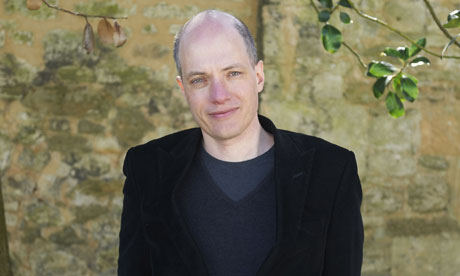
"It is perhaps only people who haven't felt the full power of sex over their logical selves who can remain uncensorious and liberally 'modern' on the subject. Philosophies of sexual liberation appeal mostly to people who don't have anything too destructive or weird that that they wish to do once they have been liberated.
However, anyone who has experienced the power of sex in general and internet pornography in particular to reroute our priorities is unlikely to be so sanguine about liberty. Pornography, like alcohol and drugs, weakens our ability to endure the kinds of suffering that are necessary for us to direct our lives properly. In particular, it reduces our capacity to tolerate those two ambiguous goods, anxiety and boredom. Our anxious moods are genuine but confused signals that something is amiss, and so they need to be listened to and patiently interpreted – which is unlikely to happen when we have to hand one of the most powerful tools of distraction ever invented. The entire internet is in a sense pornographic, it is a deliverer of constant excitement which we have no innate capacity to resist, a system which leads us down paths many of which have nothing to do with our real needs. Furthermore, pornography weakens our tolerance for the kind of boredom which is vital to give our minds the space in which good ideas can emerge, the sort of creative boredom we experience in a bath or on a long train journey. It is at moments when we feel an irresistible desire to escape from ourselves that we can be sure that there is something important we need to bring to consciousness – and yet it is precisely at such pregnant moments that internet pornography has a habit of exerting its maddening pull, thereby helping us to destroy our future."
- Alain de Botton, from Let's Talk About Sex, Live Q&A on Guardian.co.uk
Tuesday, May 15, 2012
Alms and Giving

(img from BeamsAndStruts.com)
Trevor Malkinson writes in his article "Give Alms to Everyone That Asks" about the practice of alms giving... The title was inspired by a line by Walt Whitman. The article is worth reading in its entirety.
Inspired by his article, I would like to reflect a little of my own some thoughts about almsgiving.
Like Malkinson, I have encountered the ethical dilemma for me of deciding on or deliberating over the decision of whether to give money to all folks on the street who ask for it.
Several thoughts, mostly privileged and presumptuous, come to my mind:
"What if they use it for something harmful or not useful for themselves or others?"
At the same time, "Who am I to deliberate on whether something is harmful or useful for somebody else?"
"What if this is a scam?"
These are not thoughts I am proud of, but they are there. I would like to look into them, for I think they reveal something about the way I have been conditioned to think of the world around me, and how I should behave as a citizen of it.
Something Harmful or Not Useful
I remember reading, in an admittedly American-centric version of political dualism, a few things about how our political leanings may also influence how we give:
--> Small-'l' liberal people tend to be better educated, and to favour the state as an apparatus of redistribution of wealth, but are also less likely to give generously in interpersonal interactions than...
--> Conservative people, who tend to be less well-educated, favour lowering taxes for the wealthy, yet are more likely to give to people interpersonally.
[I'd like to find this article where I first encountered this information, and post it here]
Other thoughts that arise: The feeling of scarcity (do I have enough change? Is it convenient for me to reach into my pocket right now to retrieve money? Don't I need this money for myself? Are there 'better' things to do with 'my' money?)
But then also, followed by...
...Who Am I...
... to make a decision on somebody else's life? To decide what is and isn't the 'right' thing to do with 'my' money? To decide what is helpful or harmful for others without consultation and communication? Is it not a violence to impose certain models of propriety onto others who haven't even consented to being roped into my constructions? Who am I to exert power over another, or for that matter, to withhold something that is in my possession when it is asked for by somebody else who needs it more than I? How do I use this power responsibly?
And in turn, what sort of power does this person have over me? In what sense does this power manifest? What does it look like? How does it feel in the body, in my gut, in my heart? In what sense is the information conveyed through this surveying of my sensations influencing the decision I make (spontaneously or after conscious deliberation)?
Scam?
The lust for authenticity, the assumption of the inherent badness of others, the fear of the Other, the Stranger...
...before allowing for the simple reality of their presence.
I want to reflect on Malkinson's idea of almsgiving as a type of spiritual practice in its own right, to move beyond the obsessive political posturing of small-l liberal avoidance (in other words, the thoughts that: Because I organise politically to prevent the arising of poverty to begin with, I am exempt from needing to engage directly and in person with those who experience the direct consequences of being victimised by a system whose rules I did not write), and into a space where my heart is completely broken open to receive the humanity of the Other who asks for alms...
No Giver, No Gift
I also want to reflect on the Buddhist conception:
Give without knowledge of giver, gift, or recipient
That ultimately, the notion of giving as a form of spiritual practice can itself be co-opted by egotism... That I might give, because I experience the joy of "being a giver," and that this can reify attachments to inflating the illusory sense of Selfhood (which is ultimately a form of suffering).
On the other hand, I must beware of the very FEAR of this co-optation, which leads to the AVOIDANCE of giving... In other words, because I am afraid of feeling the attachment to the joy that spontaneously arises from giving, I choose not to give! While this may seem a bit ludicrous at first, I suspect many of us have similar experiences, such as the red-facedness we experience when we are complimented, or regarded by others as 'good.'
For now, I am going to practice Giving Alms to Everyone That Asks. I am hoping it only begins as a practice, and that it will metamorph, over time, into a habit pattern that absents any obsessive deliberation by a hungry ego, and that what can truly emerge out of all of this is touching upon generosity as a very fundamental principle which nourishes my existence in the first place; that I am but a vehicle by which this universal principle is made manifest.
Friday, May 11, 2012
"Porn is Not a Dirty Word"

“Many men believe pornography is harmless and women should stop banging on about it...”
So begins the article, “Porn is not a dirty word,” by Bettina Arndt for The Age newspaper.
(image above is taken from the article posted on theage.com.au website)
What follows in her article is, predictably, an apology for mindless male entitlement; in this case, for the right to remain blissfully ignorant about some of the reasons that people might 'bang on' about it in the first place...
I’d like to unpack some of Arndt’s arguments one by one, and offer my response to it given my recent deconstruction of porn-as-unproblematic-product.
“Everywhere men look there’s another woman banging on about the dangers of porn.”
Not even preceded by an ‘it seems’ nor with a consideration of the many women who enjoy porn, nor also of the men who bang on about porn’s dangers as well.
According to the article, a recent Q&A program (a television program exploring current affairs and topics of general interest, often with guest speakers and audience participation) featured British sociologist Gail Dines, whom the article insinuates is one of those women ‘banging on’ about the damage done by “body-punishing, brutal, dehumanizing and debasing” pornography.
The choice of Dines’ admittedly extreme words, accurate or otherwise, is then contrasted with the level-headed voice of reason by a male audience member, Jeff Poole. Poole states on the program that he “had been watching porn for more than 30 years” and “In all those many thousands of hours of wobbling pink bits, I’ve never seen any of the things you talk about. I’ve never seen the degradation of women or men for that matter. I’ve never seen rape, real or simulated. I have never seen violence.”
According to Arndt, Poole “spoke for a huge audience of men who hear constant negative discussion of pornography and wonder why their own experiences are so very different… bewildered at women’s outrage at what they see as a harmless outlet for the strong male sex drive…” Arndt then adds, “To many men, porn seems a perfectly normal aspect of male sexuality that provides comfort and entertainment, and redresses the serious sexual imbalance between male and female desire.”
There are several problems with resting on men's perceptions of our own porn use as plainly acceptable, particularly just because it seems a "normal aspect" of our sexuality.
Simply:
1. What is normal is not necessarily good, true, healthy, or wise.
2. Arendt makes no further effort to problematise this normative assumption of the differences between male and female sexual desire, nor does she address the equally problematic assumption that porn actually SATIATES men’s presumably 'excess' desires (relative to...?).
Arndt does at least mention that there seems to be a difference in the types of stimulation that men use today compared to a generation ago, when she writes,
"While the older men in my project wrote about poring over dad's stolen Playboys, today's young men grow up with an internet sexual smorgasbord. Most report roaming far and wide, from vanilla sex to the ''oh my God'' offerings. One mentions breakfast conversations at his university college, dominated by boys sharing notes on the latest online ''girl shagged by donkey'' type video. Throughout history there has been sexual material designed to stir male loins, from Roman frescoes and Japanese screen prints to Victorian ''dirty postcards''."
However, Arendt does not seem to make a link between these generational differences and the reasons why some people might 'bang on' about the potential problems of porn use.
Porn and Desire
In her blog, Cupid's Poisoned Arrow (which she co-writes with her partner Gary Wilson), Marnia Robinson has written in a series of different different articles...
(a few, for example:
"Sexual Superabundance Part I"
"Sexual Superabundance Part II"
"Porn and Perception: Is Your Limbic Brain Distorting Your Vision?")
...that porn, far from sating our desires, is actually complicit in ratcheting them up. To defend porn because it temporarily sates our 'excess' desire is like defending the marketing of an itch cream that temporarily soothes our itch, while actually also being one of the very conditions which further entrenches and exacerbates the itching itself, making it far more difficult to ignore later.
Robinson writes, in her Sexual Superabundance - Part I essay,
"Men... have been learning to pursue orgasm even more efficiently and frequently--with a lot of help from today's media. They can also generate super-stimulating porn with a mouse click. In fact, as my husband says, 'an Internet user can see more hot babes (or whatever gets him going) in an afternoon than his ancestors saw in a lifetime.'
Are men more satisfied and happier? Are their relationships stronger? According to psychiatrist Norman Doidge, patients report increasing difficulty in being turned on by their actual sexual partners, spouses or girlfriends, though they still consider them objectively attractive. Initially porn helped them get more excited during sex but over time had the opposite effect." (information that Robinson cites from Norman Doidge's excellent book "The Brain that Changes Itself")
In an earlier post of mine, I've already covered my thoughts about the limitations of Robinson's writing, particularly in prescribing and reproducing tired heteronormative relationship types. Nonetheless, I reiterate that Robinson's strength is in helping to address the problem of Arndt's defence of porn as a harmless, sexual-excess-satin' tool for straight men...
The Sexless Marriage
Arndt writes, “The problem comes when men try to bully women into things they don't want to do - but arguably porn has nothing to do with the insensitivity causing men to behave in that way, which stems from their cultural and social backgrounds.”
Um... As if porn isn’t ALSO a part of culture and society, as if porn was not a PRODUCT of culture and society, as if porn does not also SHAPE, CHANGE and AFFECT culture and society.
It would be pretty ludicrous to assume that, for example, fast-food chain advertising in mainstream media plays NO part in influencing how we experience our desire for food, and concurrently, how we might articulate this desire when we choose to share food (or avoid food) in the company of others. So similarly, it is pretty ludicrous to assume that pornography would play NO part in influencing how we experience our desire for sex, and concurrently, how we might articulate this desire when we choose to share sex (or avoid sex) in the company of our partner(s).
Robinson’s writing is here far more sophisticated than anything I can render, in her compassionate reading of the neurochemical basis for the transition into sexlessness from what may once have been passionate liaisons. Habitual orgasm to a single stimulus (either a single woman, e.g. one’s wife, or a single image on a computer screen), diminishes the capacity for that stimulus to titillate in the same way. i.e. One requires more diversity of stimulation, or increased novelty, in order to achieve the ‘same’ orgasmic outcome.
This is not inherently a problem, of course, if one is able to understand the dynamism behind this bio-logic. However, the problem in this sexless marriage between a man and a woman requires multiple ignorances:
Two at least:
1. Of the woman, for the man’s need for variety / stimulation in order to achieve orgasmic ‘satisfaction’
2. Of the man, for the fact that this underlying dynamic is actually further reinforced, reinscribed and exacerbated through the use of porn. It is not necessarily a harmless remedy.
Arendt’s proposed remedy, one which poses itself as sex-positive, is for these women to just get over their prudishness, and be open to the inherently different needs of their innocent male partners’ militant libidos which will always be in relative overdrive because of their sex.
(which, while posing as a liberated, sex-positive view, seems to me frankly gender-reductionist and regressive)
Sure, we may ask our partners to be more compassionate about our use of porn, and we may even experiment (with their consent) to a MUTUAL use of porn. We may certainly insist that we should not be shamed because of our use. These are legitimate calls for autonomy, and the basic need we have (no matter our sex or gender) to be respected as decision-makers around the organisation of our sexual impulses.
However, another remedy, which is one that I am and have been proposing throughout my few pieces on porn, is for men to actually catch ourselves in the thick of this cycle of habituation to variety and stimulation, and our tendency to ignore the addictive potential of this game of habituation (desensitisation to stimuli).
We can learn to de-condition ourselves from this cycle. We can actually consider that there IS an alternative to normalising and habituating to porn use for managing one’s libido, including within the context (or confines?) of a sexless marriage.
Here are some thoughts:
1. Sexlessness is not necessarily a problem.
2. To the extent that it is a problem, it does take at least two in a relationship for there to be a problem... In other words, acknowledge our own complicity (as men) in creating and/or maintaining this problem.
3. Consider that habitual porn use may be a part of how we are complicit.
I want to re-stress... This is not strictly a moral issue for me, nor do I mean to condemn the use of porn, any more than I would condemn the consumption of sugar. Sexual desire and hunger are two inevitable and indeed, even joyous and pleasureable parts of human experience... particularly with good company. I also certainly mean no lack of compassion, empathy or understanding for those of us who truly do feel stifled by sexless marriages, or sexless partnerships (or indeed, unwilled singlehood or partner-less-ness). Indeed, I empathise with the genuine belief in pornography’s benign role in assisting in relief, and its role in sexual liberation. After all, I have certainly felt this way myself for much of my adult life.
My main concerns have to do with the lack of insight into the impermanent nature of the relief that comes from porn, indeed, into the fact that porn is one means that the original itch is exacerbated (and then essentialised and assimilated as a 'normal' aspect of male libido), the potential problem of the increasing ubiquity of porn (particularly of the escalating normative standards of stimulation) in men's lives (and increasingly, women as well), and also in Arndt's hypocrisy of hinting at women's prudish hysteria while contrasting them with the calm innocence of men in sexless marriages.
Further Questions to Explore
The issue of the assumed problem of sexlessness (asexuality as pathology?)
Some of my Previous posts on Porn:
--> Abstinence From Porn
--> Integral Theory and Pornography
Wednesday, May 9, 2012
Fraternity?
"The opposite to patriarchy is not matriarchy, but fraternity..."
- Germaine Greer
Greer continues... "yet I think it’s women who are going to have to break this spiral of power and find the trick of cooperation..."
a cooperation of a kind that...
"...could make politics irrelevant; by a kind of spontaneous cooperative action the like of which we have never seen; which is so far from people’s ideas of state structure or viable social structure that it seems to them like total anarchy — when what it really is, is very subtle forms of interrelation that do not follow some heirarchal pattern which is fundamentally patriarchal."
I wonder if it must be women who break this spiral alone...?
How do we foster a culture of brotherhood and sisterhood and siblinghood,
no matter our gender nor our desire nor
some alchemical archetype of some form...
Siblinghood?
A preliminary Definition :
Through this world of strange times... we look out for one another, encourage one another to fight for the things worthy of fight. To nurture and hold whosoever needs nurturing and comfort. To hold one another accountable for the things we've done wrong that we should right. For forgiving those who have hurt us, and for forgiving ourselves for having hurt others...
and then telling one another, gently but firmly,
to stand up..., and
"Let's try again."
For sticking together no matter how difficult the journey ahead may get... this strange rush of civilisation toward ... what End?
What joy,
what a privilege,
to have space and time this precious,
to reflect and to contemplate.
Apophenia
Apophenia is the experience of seeing meaningful patterns or connections in random or meaningless data.
Consider the following headlines, appearing currently on my news aggregator:
1) Al Qaeda bomb plot was foiled by double agent
2) North Carolina voters approve same-sex marriage ban
3) 'Where the Wild Things Are' author Maurice Sendak dies
4) Anger at austerity, immigration feeds far right's rise in Europe
5) In Greece, coalition government proves elusive amid impasse
Some possible things we might draw from these headlines:
1) The human condition is a miserable, fearful one, and the only certainty in life is death.
2) Violence abounds in the world.
3) The best laid plans of mice and men often go awry.
Further connections are left as an exercise for the reader.
1) Al Qaeda bomb plot was foiled by double agent
2) North Carolina voters approve same-sex marriage ban
3) 'Where the Wild Things Are' author Maurice Sendak dies
4) Anger at austerity, immigration feeds far right's rise in Europe
5) In Greece, coalition government proves elusive amid impasse
Some possible things we might draw from these headlines:
1) The human condition is a miserable, fearful one, and the only certainty in life is death.
2) Violence abounds in the world.
3) The best laid plans of mice and men often go awry.
Further connections are left as an exercise for the reader.
Friday, May 4, 2012
Global Woman ... and some Thoughts on Work
Today, I went to the Melbourne City Library and borrowed
Global Woman: Nannies, Maids and Sex Workers in the New Economy
edited by Barbara Ehrenreich and Arlie Russell Hochschild

So far, it has been an absolutely excellent read. The book is a compilation of essays covering the issues of mass migration of women from poor countries to rich countries to fill in what Ehrenreich and Hochschild call the "care deficit"...
Care Deficit?
In summary, many of the 'gains' and 'successes' of materialist feminism in wealthy, "Western," industrialised countries have revolved around the 'rights' of women within public and paid professional spheres, in other words, in spheres typically more traditionally demarcated as 'male' (rights of citizenship, rights of property ownership, etc.). While this increase in access and opportunity has meant greater/increasing economic equality (in public spheres) for women citizens, this has not been correlated with as sharp an increase, particularly in late capitalist feminism dominated by bourgeois interests, in an incentive to prioritise and politicise the importance of domestic labour.
This means a lot of the roles historically fulfilled by women, in general and in particular, domestic & caretaker roles, are now being filled, in particular, by migrant women.
In the first essay of the book, "Love and Gold," Hoschschild says it best:
"Women who want to succeed in a professional or managerial job in the First World [sic]... face strong pressures at work. Most careers are still based on a well-known (male) pattern: doing professional work, competing with fellow professionals, getting credit for work, building a reputation, doing it while you are young, hoarding scarce time, and minimizing family work by finding someone else to do it. In the past, the professional was a man; the 'someone else' was his wife. The wife oversaw the family, itself a flexible, preindustrial institution concerned with human experiences the workplace excluded: birth, child rearing, sickness, death. Today, a growing 'care industry' has stepped into the traditional wife's role, creating a very real demand for migrant women.
But if First World [sic] middle-class women are building careers that are molded according to the old male model, by putting in long hours at demanding jobs, their nannies and other domestic workers suffer a greatly exaggerated version of the same thing. Two women working for pay is not a bad idea. But two working mothers giving their all to work is a good idea gone haywire. In the end, both First and Third World [sic] women are small players in a larger economic game whose rules they have not written."
Elsewhere, Ehrenreich and Hochschild mention that this gap has certainly not been narrowed by any significant increase in involvement (within the domestic sphere) of men. After all, there is a huge economic disincentive for individuals socialised within so-called "First World" settings to participate in labour that is not only financially uncompensated, but also socially undervalued. This may be experienced as especially 'disenfranchising' for men who have especially vested interests in holding on to the privilege of access to and association with paid, public, professional worlds. Men may experience both deeply internalised and socio-cultural pressures to dissociate from spheres of experience which have been historically feminised and constructed as belonging to women.
Hochschild writes:
"...when the unpaid work of raising a child became the paid work of child-care workers, its low market value revealed the abidingly low value of caring work generally - and further lowered it...
Just as the marker price of primary produce keeps the Third World low in the community of nations, so the low market value of care keeps the status of the women who do it - and ultimately all women - low..."
One notable exception to this trend has been Norway:
"One excellent way to raise the value of care is to involve fathers in it. If men shared the care of family members worldwide, care would spread laterally instead of being passed down a social class ladder. In Norway, for example, all employed men are eligible for a year's paternity leave at 90 percent pay. Some 80 percent of Norwegian men now take over a month of paternal leave. In this way, Norway is a model to the world. For indeed it is men who have for the most part stepped aside from caring work, and it is with them that the 'care drain' truly begins."
Caring As My Political Act
I am reflecting on the fact that I have been participating, for the most part of my professional life, in the community sector, particularly for the GLBT community. As a man, I have not necessarily consciously thought of this as a particularly feminist or even pro-feminist act. Yet, clearly coming from my undergraduate academic background in gender studies, it was no surprise to me to learn that this industry is not only typically feminised (a workforce disproportionately composed of women), but historically undervalued and underpaid as well.
I am excited about recent developments in Australia, where several unions within the community sector, particularly the Australian Services Union (ASU) have fought for, and recently won, an Equal Pay increase of between 19% - 41% for all community sector workers, which is to be phased in over the next 8 years. This is a landmark Federal ruling, which makes a huge difference in rectifying the problem of the gender pay gap.
I believe that this will have positive implications for all of us. It will allow community sector workers not only to have more economic agency, but it also is a powerful cultural statement about the value of caring work in this country.
I believe this also means that we are far more likely to achieve the outcome of increased incentive to do part-time public work (either for those of us who have had 'too little' work, constructed as 'unemployed' or 'underemployed,' or for those of us who have 'too much' work, typically people with 'full time,' 40 - 50 hour-a-week jobs). Part-time work, with increased pay within carer/community-/social work sectors, is far more likely to be financially sustainable while one is also trying to run a household (with its domestic duties), whether alone or in a shared household.
Ideally, this would free women (and men) in these sectors to pursue other more personal and domestic aspirations (family, self-care, etc.), and not perpetuate the cycle of the 'care deficit' which has been part and parcel of the problem of global inequity...
Oh this white elephant of an unfinished, late-capitalist feminist project, of which the hiring of oft-exploited migrant workers has been but one symptom.
Global Woman: Nannies, Maids and Sex Workers in the New Economy
edited by Barbara Ehrenreich and Arlie Russell Hochschild
So far, it has been an absolutely excellent read. The book is a compilation of essays covering the issues of mass migration of women from poor countries to rich countries to fill in what Ehrenreich and Hochschild call the "care deficit"...
Care Deficit?
In summary, many of the 'gains' and 'successes' of materialist feminism in wealthy, "Western," industrialised countries have revolved around the 'rights' of women within public and paid professional spheres, in other words, in spheres typically more traditionally demarcated as 'male' (rights of citizenship, rights of property ownership, etc.). While this increase in access and opportunity has meant greater/increasing economic equality (in public spheres) for women citizens, this has not been correlated with as sharp an increase, particularly in late capitalist feminism dominated by bourgeois interests, in an incentive to prioritise and politicise the importance of domestic labour.
This means a lot of the roles historically fulfilled by women, in general and in particular, domestic & caretaker roles, are now being filled, in particular, by migrant women.
In the first essay of the book, "Love and Gold," Hoschschild says it best:
"Women who want to succeed in a professional or managerial job in the First World [sic]... face strong pressures at work. Most careers are still based on a well-known (male) pattern: doing professional work, competing with fellow professionals, getting credit for work, building a reputation, doing it while you are young, hoarding scarce time, and minimizing family work by finding someone else to do it. In the past, the professional was a man; the 'someone else' was his wife. The wife oversaw the family, itself a flexible, preindustrial institution concerned with human experiences the workplace excluded: birth, child rearing, sickness, death. Today, a growing 'care industry' has stepped into the traditional wife's role, creating a very real demand for migrant women.
But if First World [sic] middle-class women are building careers that are molded according to the old male model, by putting in long hours at demanding jobs, their nannies and other domestic workers suffer a greatly exaggerated version of the same thing. Two women working for pay is not a bad idea. But two working mothers giving their all to work is a good idea gone haywire. In the end, both First and Third World [sic] women are small players in a larger economic game whose rules they have not written."
Elsewhere, Ehrenreich and Hochschild mention that this gap has certainly not been narrowed by any significant increase in involvement (within the domestic sphere) of men. After all, there is a huge economic disincentive for individuals socialised within so-called "First World" settings to participate in labour that is not only financially uncompensated, but also socially undervalued. This may be experienced as especially 'disenfranchising' for men who have especially vested interests in holding on to the privilege of access to and association with paid, public, professional worlds. Men may experience both deeply internalised and socio-cultural pressures to dissociate from spheres of experience which have been historically feminised and constructed as belonging to women.
Hochschild writes:
"...when the unpaid work of raising a child became the paid work of child-care workers, its low market value revealed the abidingly low value of caring work generally - and further lowered it...
Just as the marker price of primary produce keeps the Third World low in the community of nations, so the low market value of care keeps the status of the women who do it - and ultimately all women - low..."
One notable exception to this trend has been Norway:
"One excellent way to raise the value of care is to involve fathers in it. If men shared the care of family members worldwide, care would spread laterally instead of being passed down a social class ladder. In Norway, for example, all employed men are eligible for a year's paternity leave at 90 percent pay. Some 80 percent of Norwegian men now take over a month of paternal leave. In this way, Norway is a model to the world. For indeed it is men who have for the most part stepped aside from caring work, and it is with them that the 'care drain' truly begins."
Caring As My Political Act
I am reflecting on the fact that I have been participating, for the most part of my professional life, in the community sector, particularly for the GLBT community. As a man, I have not necessarily consciously thought of this as a particularly feminist or even pro-feminist act. Yet, clearly coming from my undergraduate academic background in gender studies, it was no surprise to me to learn that this industry is not only typically feminised (a workforce disproportionately composed of women), but historically undervalued and underpaid as well.
I am excited about recent developments in Australia, where several unions within the community sector, particularly the Australian Services Union (ASU) have fought for, and recently won, an Equal Pay increase of between 19% - 41% for all community sector workers, which is to be phased in over the next 8 years. This is a landmark Federal ruling, which makes a huge difference in rectifying the problem of the gender pay gap.
I believe that this will have positive implications for all of us. It will allow community sector workers not only to have more economic agency, but it also is a powerful cultural statement about the value of caring work in this country.
I believe this also means that we are far more likely to achieve the outcome of increased incentive to do part-time public work (either for those of us who have had 'too little' work, constructed as 'unemployed' or 'underemployed,' or for those of us who have 'too much' work, typically people with 'full time,' 40 - 50 hour-a-week jobs). Part-time work, with increased pay within carer/community-/social work sectors, is far more likely to be financially sustainable while one is also trying to run a household (with its domestic duties), whether alone or in a shared household.
Ideally, this would free women (and men) in these sectors to pursue other more personal and domestic aspirations (family, self-care, etc.), and not perpetuate the cycle of the 'care deficit' which has been part and parcel of the problem of global inequity...
Oh this white elephant of an unfinished, late-capitalist feminist project, of which the hiring of oft-exploited migrant workers has been but one symptom.
Friday, February 17, 2012
On Miserliness

“So what is envy? Let’s return to the Augustinian scene of a sibling envying his brother who is suckling at the mother’s breast. The subject does not envy the Other’s possession of the prized object as such, but rather the way the Other is able to enjoy this object, which is why it is not enough for him simply to steal and thus gain possession of the object. His true aim is to destroy the Other’s ability/capacity to enjoy the object. So we see that envy needs to be placed within the triad of envy, thrift, and melancholy, the three forms of not being able to enjoy the object and, of course, reflexively enjoying that very impossibility. In contrast to the subject of envy, who envies the other’s possession and/or jouissance of the object, the miser possesses the object, but cannot enjoy/consume it. His satisfaction derives from just possessing it, elevating it into a sacred, untouchable/prohibited, entity which should under no conditions be consumed. The proverbial figure of the lone miser is the one we see returning home, safely locking the doors, opening up his chest and then taking that secret peek at his prized object, observing it in awe. The very thing that prevents his consumption of the object guarantees its status as the object of desire. Most tragic of all, the melancholic has free access to all he wants, but finds no satisfaction in it.”
- Slavoj Zizek, from "Violence"
To Be Investigated:
"Miserliness" as compared to "Thrift"
"Chastity" (as virtuous) as compared to "Sexual Anorexia"
and the melancholic (a)sexuality of a certain logic of Queerness
Tattoos in Singapore

I just grabbed that foto off of Jullieit's deviantart page. According to her page, she is based in Sydney and Hong Kong. The above photo was apparently taken in Singapore.
I love this photo.
It is erotic, collaborative. It features prominently a woman's gaze (of the photographer herself, together with the eyes of the woman in the background), staring at the prominent homoeroticism of the quite quite gorgeous tattoo artist and his subject's body.
The image is also interesting to me because everyone is Asian; The 'counterculture' to Singapore's placid, efficient exterior (though never fully separate from it, of course). The photo is an invitation, or at least a window that we peer through, to witness this intimacy.
The tattoo-ed guy's gaze is averted away from the camera, while there is written upon the tattoo artist's face intense concentration, in a state of flow, his whole body leaning and oriented toward his art, his whole world zoning in on his act-of-inking... mergence of activity between two men enabling One shared activity... Intimate Comradeship? Etching fraternity into flesh.
Postcolonial man-on-man action...
Wednesday, February 8, 2012
On Affect
Something can be problematic without my having to reject it in its entirety.
I can like something while acknowledging its imperfections.
Something can elicit an overall negative response in me without my having to forcibly push aside any consideration of its 'positive' qualities.
So similarly, I can choose to reject something out of simple distaste without immediately owing anyone an explanation.
I can like something while acknowledging its imperfections.
Something can elicit an overall negative response in me without my having to forcibly push aside any consideration of its 'positive' qualities.
So similarly, I can choose to reject something out of simple distaste without immediately owing anyone an explanation.
Friday, February 3, 2012
Projects
I am moving to Melbourne from Sydney in early March, to explore a period of calm gestation of ideas and Being... I will be writing for fridae.asia on a monthly basis, covering IDon'tKnowWhat, but it should prove interesting.
I am recommitting to blogging here on Psychonaut Erotica, with some loose plans on turning this more into an online "Zine" rather than a blog, so that we can have featured pieces by featured writers, and a loose-knit hierarchy of editors as we are able to commit. I'm exploring the idea of an online writer's community, exploring ideas of spirituality, and moving beyond the malaise that can come from the privilege/excess as well as the poverty of postmodernity...
In the meantime, here are a few things I would like to explore:
1. Themes of topics I want to explore and write about in more depth
2. More photographic journalism, in my forays into Melbourne's urbanscape
3. Reflecting on my Professional World(s) that I have been in
4. Integrating my slow re-emergence into Facebook, and ideally how this can positively influence the growing of a Zine (rather than detract from my commitment to Psychonaut Erotica, as it has thus far been)
I am recommitting to blogging here on Psychonaut Erotica, with some loose plans on turning this more into an online "Zine" rather than a blog, so that we can have featured pieces by featured writers, and a loose-knit hierarchy of editors as we are able to commit. I'm exploring the idea of an online writer's community, exploring ideas of spirituality, and moving beyond the malaise that can come from the privilege/excess as well as the poverty of postmodernity...
In the meantime, here are a few things I would like to explore:
1. Themes of topics I want to explore and write about in more depth
2. More photographic journalism, in my forays into Melbourne's urbanscape
3. Reflecting on my Professional World(s) that I have been in
4. Integrating my slow re-emergence into Facebook, and ideally how this can positively influence the growing of a Zine (rather than detract from my commitment to Psychonaut Erotica, as it has thus far been)
Thursday, January 5, 2012
Was the Buddha actually a 21st century gay of color?
Let's see:
1) Left his wife and kids
2) Had peak experience under a tree
3) Often depicted with his shirt off
4) Philosophy often co-opted by white straight women
1) Left his wife and kids
2) Had peak experience under a tree
3) Often depicted with his shirt off
4) Philosophy often co-opted by white straight women
Thursday, December 1, 2011
Addiction, Schmaddiction

Why are we singling out this one behavior as a problem? There are people who do model trains obsessively: They focus their life on it, their relationships end because of their interest in this, they fill their houses with these model trains –
But we aren’t rushing to subject them to brain scans.
Exactly, right. This is a moral attack on sexuality. They it is in the interest of people to build and develop fear of sex. Because they think that if we’re not afraid of sex, people are going to go out and have lots of sex. God forbid.
http://www.salon.com/2011/11/29/dont_believe_the_sex_addiction_hype/
Subscribe to:
Posts (Atom)